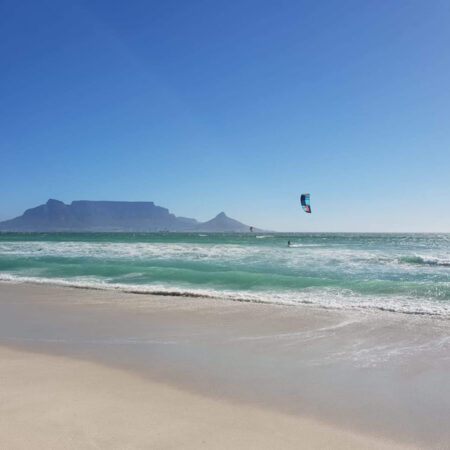
Towfoiling Portugal’s Atlantic swell with Towtrips
Jet ski, driver, board and foil, two hours at a time. Towtrips tow foilers into Atlantic swell on Portugal’s Alentejo coast, and their 2026/27 swell season opens this month.
READ MORE
































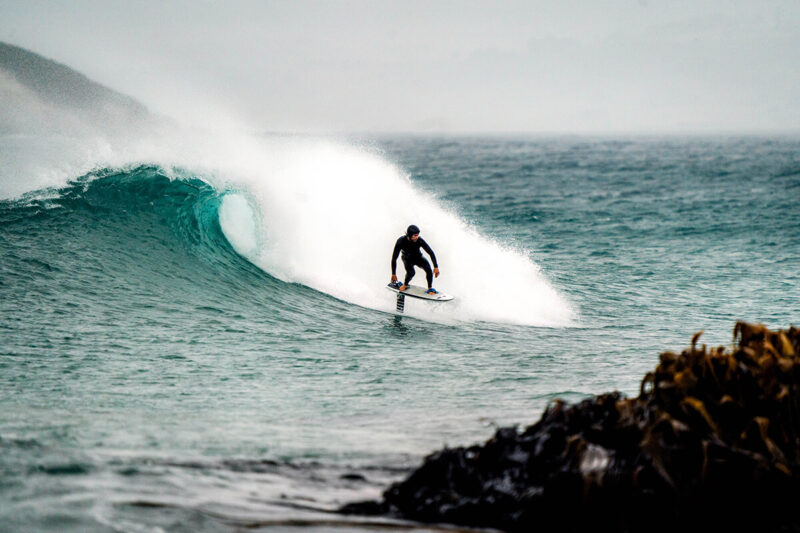
Header photo: Oscar Hetherington
Ten foils, every one ridden and tested by the Foiling Magazine team. Each card carries the numbers you actually need, the setup we tested it on, and our tester's honest account of what it's like once you're flying.
FliteLab
FM Tested – Issue 29
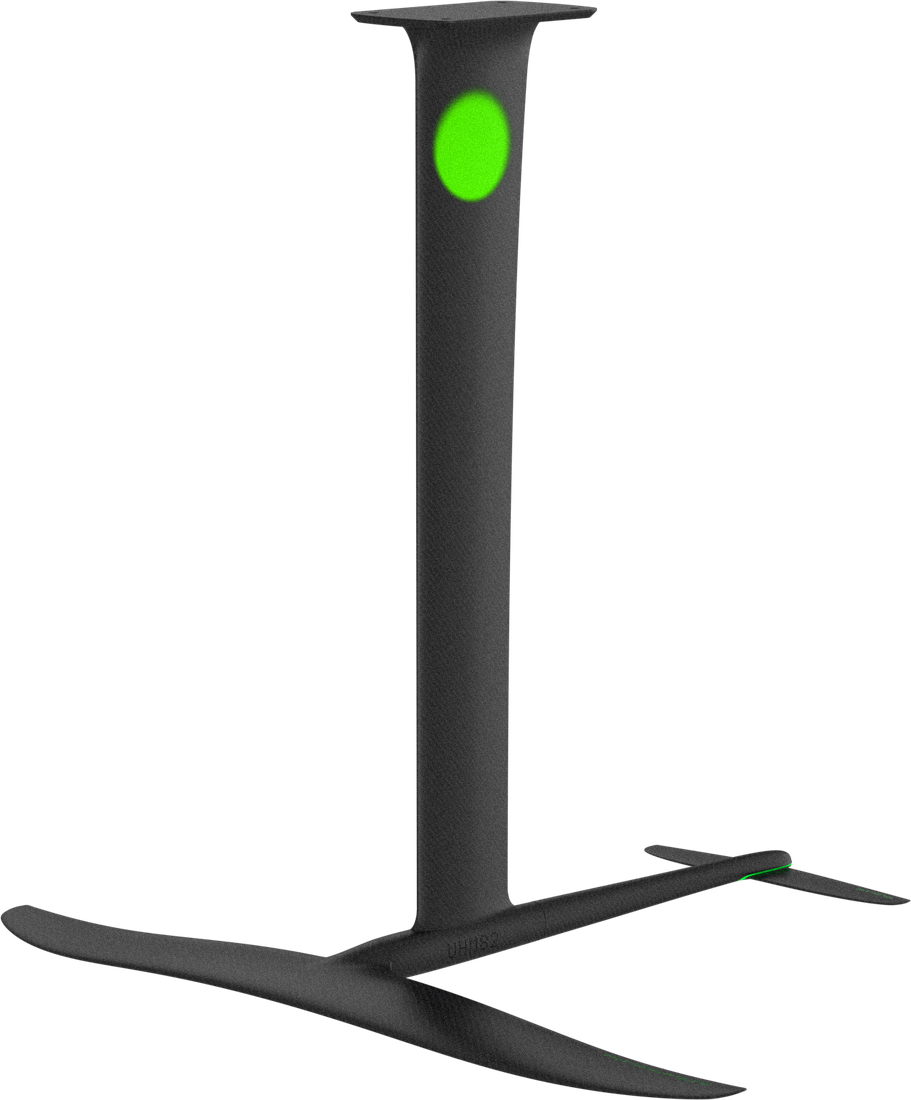
The FLUX is Adam Bennetts' signature line for Flite. If you keep up to date with his antics you can see that, well, it works pretty well! Fliteboard pitch it as a super-agile mid-aspect wing for prone and wing foilers, built for a surf-orientated ride with carve and rail-to-rail performance. The front wing mounts on a conical taper, pinned by two M8 bolts onto a titanium insert protruding from the mast – it's a great system which tightens up super well but is never going to seize up and need the mallet treatment.
Tester notes
Pre-release hype gave this foil an almost mythical status, so we set out to scythe through the hype machine. The FLUX is legit and lives up to it.
We rode it well past its stated remit – prone, SUP, wing, parawing, and we even stuck a foil assist on it whilst no one was watching, which probably breaches several international treaties.
The pitch stability allows a narrow, non-defensive stance and minimizes the amount of correction you need to perform. That's most apparent in choppier water states and particularly at higher speed, which it ploughs through unflustered. What it doesn't do is lock out the roll in the top end, and that combination – stable in pitch, still eager in roll – is what gives you the confidence boost to ride in a more playful manner.
The two sizes want different things from you. The 1010 is very easy to pump with a lazy cadence and eats up ground; the 808 likes to be kept moving with a more jabby, energetic approach. At 90kgs the 808 has a ridiculous top end and, unless you were towing it, would more than serve as our smallest foil. It seemed to prefer a foot position very slightly ahead of the mast center.
Sizing feels smack on where it should be. It's most definitely a standout surf foil that swaggers into the party late and immediately establishes itself as a benchmark.
Armstrong
FM Tested – Issue 27

Armstrong built the UHA around glide, efficiency and flow – their words – for riders who care less about lift and more about carrying speed and connecting sections. Premium pre-preg Toray high-modulus carbon on the A+ system, seven sizes, every one at 12.6 aspect. They're honest about where it doesn't shine: better for open-face riding and linking waves than for tight, snappy turns.
Tester notes
It's not an evolution of the DWP; it looks markedly different. In basic terms think more of a HA that's been stretched a little. All design roads lead to efficiency.
We got the pumping wrong at first. Initially we were putting in the work, and perhaps pushing a little too hard. It seems to prefer a more subtle application of pressure at a more relaxed rate, and gives back less energy than you would imagine for the amount of projection it supplies. It likes to ride high on the mast and this has a noticeable effect on the glide.
The stall characteristics are almost impossibly smooth and pitch stability is extremely high considering the market sector. White water tolerance is impressive for a foil of its dimensions, and you can flair a tip with confidence. For a high-aspect foil it feels solid enough to stamp on.
The nicest surprise came from watching an intermediate wingfoiler on the 870 – a lightweight rider, learning tacks. That extra bit of carry allowed her to maintain momentum and complete the maneuver, without stalling out.
Retaining a playful turning ability gives it a far wider range of use across disciplines than other foils in its class. Pump less, glide more, and retain more energy and momentum for longer runs. If glide is your number one priority, the UHA is the choice from the Armstrong range.
KT
FM Tested – Issue 28
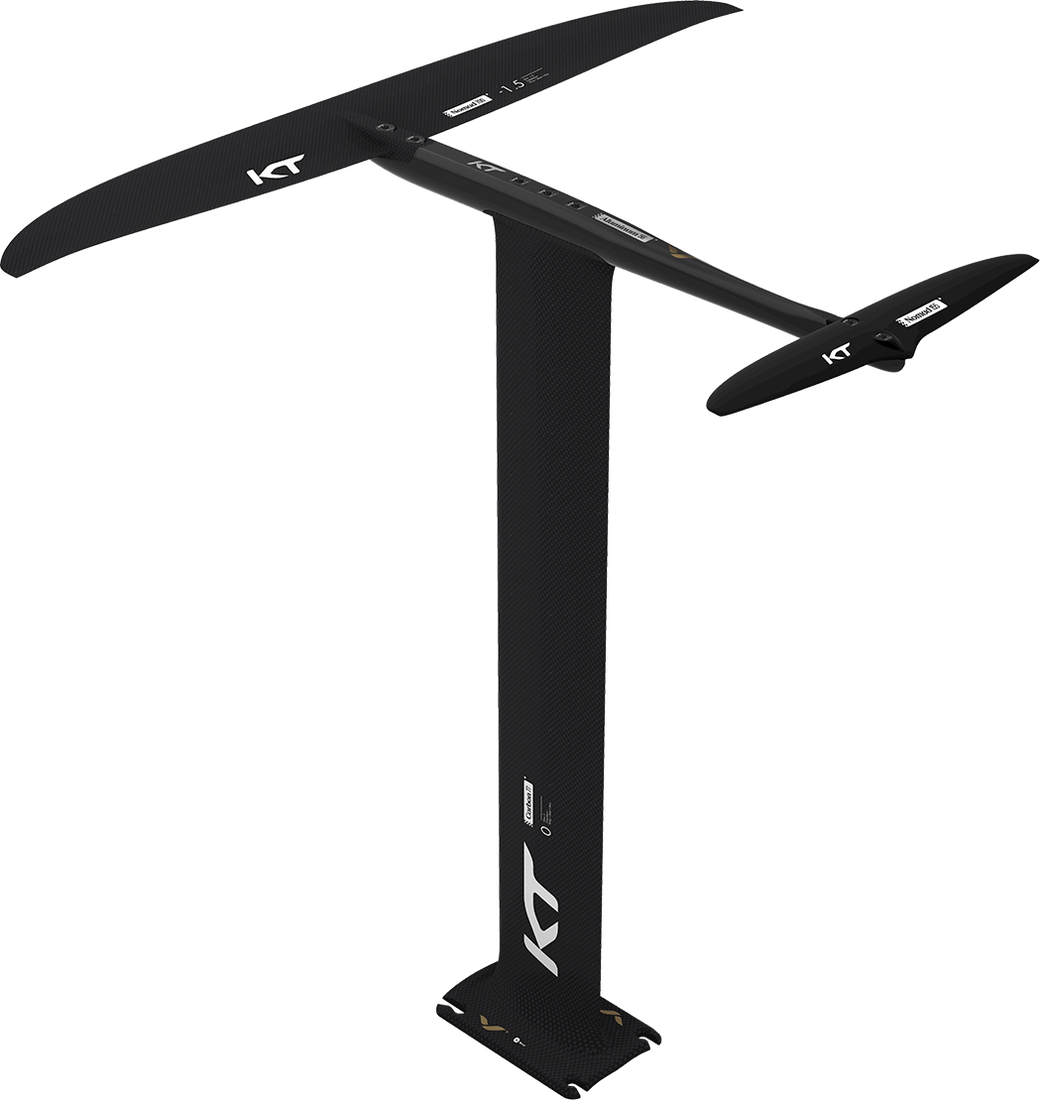
Developed largely by Kane de Wilde, whose tail designs have quietly influenced the whole industry, and with Kai Lenny on the test team. KT describe a swept mid-aspect shape with an advanced high-camber airfoil – a rear-loaded design that reduces surface area while boosting low-speed performance – plus inflected wingtips for breach control and a deliberately compact span for leaned-over carves. Everything is interchangeable across KT's foil range.
Tester notes
An often lauded statement in your average YouTube foil review is that a foil has lift more significant than its stated dimensions. Here we can assure you it's absolutely true – the 830 we tested is far more in line with 1000cm² foils from across the wider market.
The rear wing camber has to be seen. It's so deep and saucer like you could feed your pets from it.
We found the 56cm fuselage a bit nervy for our often confused northern European water states. Moving to the 63cm made a significant difference to pitch stability, and unlocked both a more aggressive approach and an easier pumping cadence – after which we could chuck the Nomad around with far more confidence.
Historically we've found some of these high cambered foils a little choppy in their stall characteristics, but the Nomad keeps things neat and tidy in that department. It's a lifty, skatey and agile surf foil with its own unique and dynamic feel, and it locks in more the faster you go.
Factor in a little experimentation time to get it to suit your personal taste. It's a tweaker's dream straight out of the box, and at the price it bats above its weight. In a market full of competent foils, this one stands out as a foil with a personality.
Axis
FM Tested – Issue 27
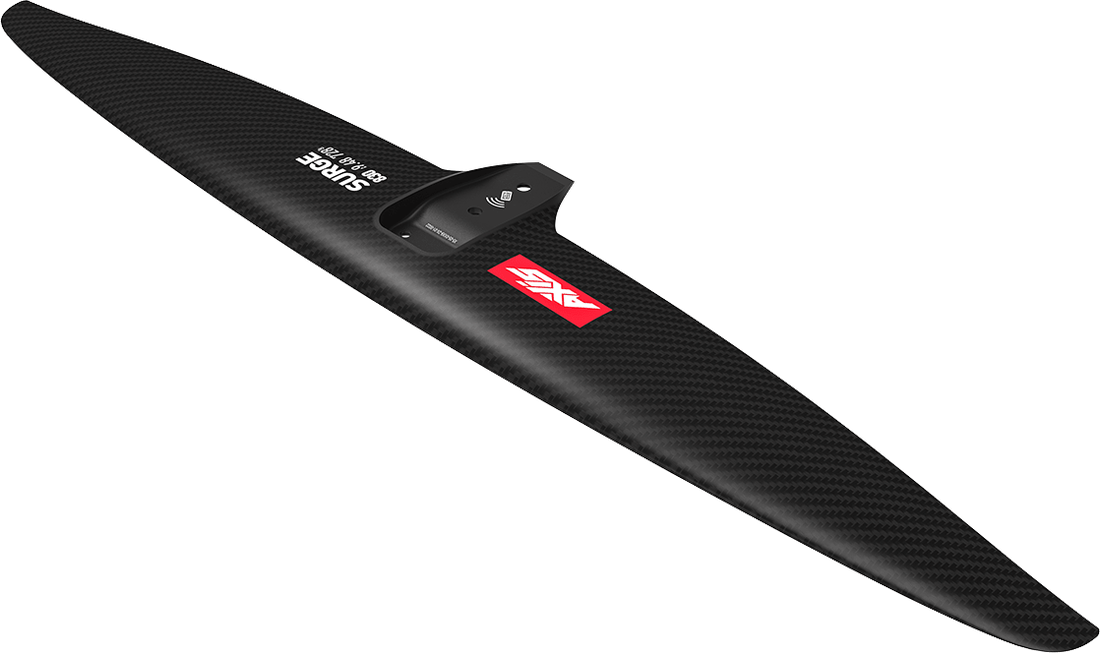
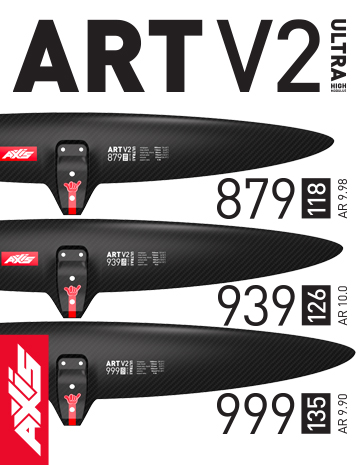
The Surge is framed as a rebellion against a surf-foil status quo that made you choose between carve and glide, and it sits deliberately between the freeride versatility of the ART V2 and Spitfire and the high-aspect downwind speed of the Fireball and Tempo.
Tester notes
It's been a while since Axis made a notable impact on the surf style foiling scene, and its curvaceous moustache might be an unfamiliar look to Axis riders. It tears up the old carve-versus-glide compromise, and delivers both in one unapologetic package.
Take-off is early and abrupt, spiking a boost of power both up and forwards. That low-end lift is predictable and stable as you ride at the foil's stall speed, not dropping out or overly changing foot pressure, and the pump cadence is forgiving to both short taps or longer drives.
Roll is the signature. The Surge wants to be pushed down like it's the rail of a board, and unlike flatter shaped wings it's very happy holding down a banked turn. More force equates to more roll, allowing riders to really commit their full body into turns and snaps. Loading power through the turn won't be a feeling all riders will seek.
Tackling white water is a mellow experience on the Surge – its stability would trick you into thinking you are riding a lower aspect ratio foil, and it handles significant tip breeches with ease, provided your turns are loaded and pushed. Pitch stability is notably smoother than its Axis foil cousins.
For speed and glide it's not quite keeping up with dedicated downwind weapons, but still giving them a run for their money in the right hands. A new sensation from Axis with a reassuringly familiar feel.
Cabrinha
FM Tested – Issue 28
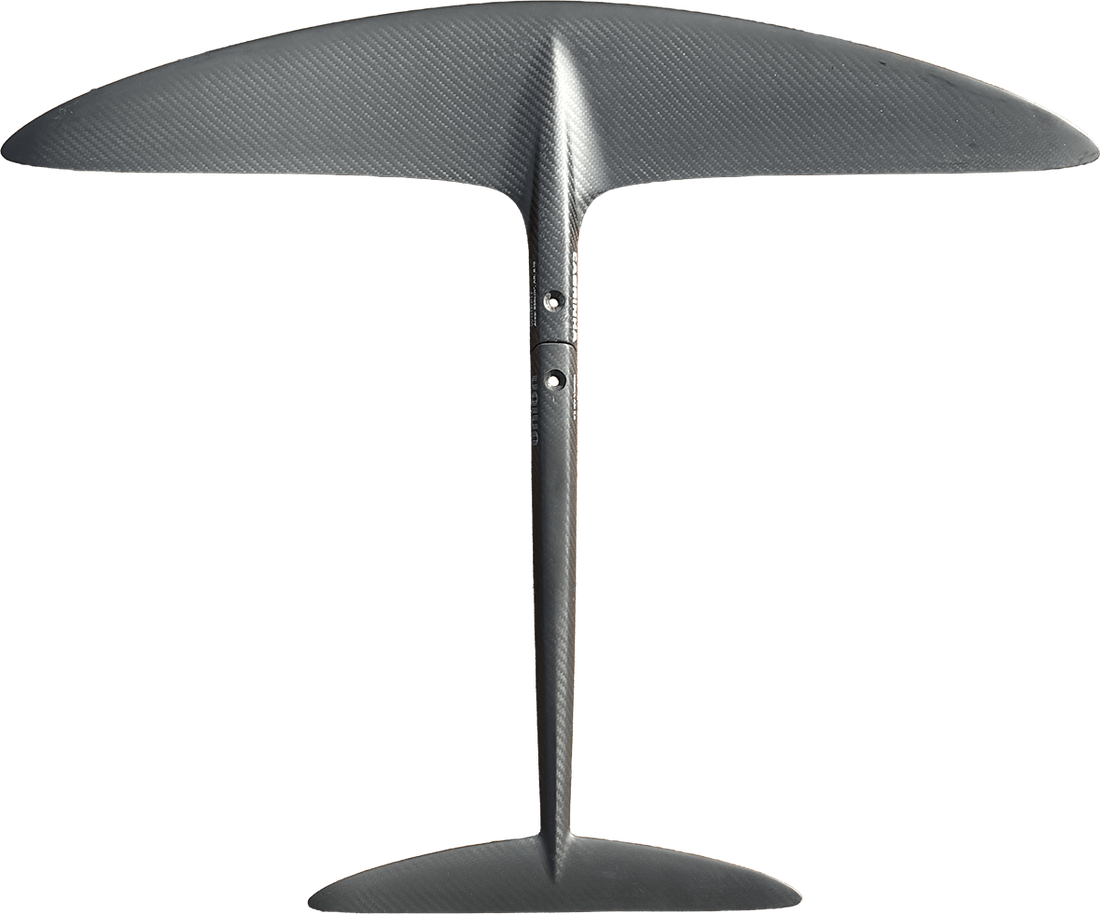
Part of Cabrinha's new Union series, built in M40 pre-preg high-modulus carbon, with a three-screw Union connection that cuts assembly time and improves hydrodynamic efficiency. The Whippit sits in the middle of a five-wing Union range, between the ultra-high-aspect Prestige and the freestyle-leaning Rebound.
Tester notes
Within the first few meters, it was clear the foil is fast and highly responsive to our input. The waterstart on a sinker board was as easy as it gets in around 20 knots, and while it took a handful of jibes to calibrate to its sensitivity, we felt completely at home super quickly.
The foil really comes alive at higher speeds, delivering long, fast runs that are insanely fun without the feeling of having any drag. Adapting to its speed took some time when setting up for jumps and tricks, but after a few attempts, we got the hang of it.
The second session had slightly less wind and some waves, and waterstarts became a bit more demanding, as this front wing needs some horizontal speed to get flying. However, once up, it turned into an absolute wave machine. The combination of speed and extremely pivotal turns made the session pure surf madness – you can link sections effortlessly without any help from the wing.
Glide is solid for a wing of this size, but it's definitely a foil that prefers to be driven fast. Pumping isn't its strongest point, but let's not forget, this is a 750. While we occasionally felt the limitations of its glide and pumping efficiency during the lulls, these are expected tradeoffs for a wing of this size and the upsides far outweigh the compromises.
With precise foot pressure and an experienced touch it truly lights up. The Whippit lives up to its name and truly comes alive – you can really whip it around. If you have the skills, then you will be rewarded.
Armstrong
FM Tested – Issue 25
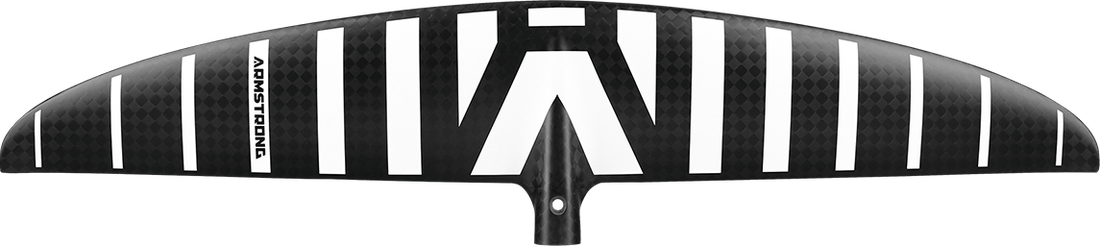
Armstrong call it the dream carving machine, and the engineering claim behind it is specific: a foil section evolved to deliver a takeoff speed on par with the HA while keeping a top speed close to the original MA, recovering instantly from breaches. Toray pre-preg high-modulus carbon on the A+ system, with a larger external weave than most foils on the market. Eight sizes, tested here alongside Armstrong's new Surf stabilizer range.
Tester notes
The OG MA was a foil with legendary status, and Cash used it to push the sport beyond what we thought was capable. But I think it's fair to say you needed to be on your game to ride it, and the foil needed to be ridden with conviction and kept in its sweet speed range.
On the water with the Mk II the phrase we kept finding ourselves repeating was “sure footed”, particularly compared to the previous version. Pitch stability throughout the speed range is massively improved, and it's most noticeable when you're diving a more critical bottom turn. It locks in and seems to plough through turbulence and doesn't falter, even at the upper reaches of its speed range.
It goes obscenely well rail to rail and really locks in better on a high-speed turn – you feel you can plant a heavy turn without the risk of too much push. Riding the 690 with a Foil Drive at the back of our local river mouth, head high with six knots of outgoing current, where you would normally hit the tripwire, we were riding it out with control.
The new stabilizers earn their place too. Against the Dart 120, the current household favourite, the Surf Mk II 130 feels a little less flighty, with more consistency through turns and a little more back foot pressure and reassurance. This combo rail to rail is dreamy.
Armstrong have pulled a magic trick retaining that top end and hard carving ability but rounded off the bottom end. Where the original leaned toward winging and propelled sports, the Mk II spans deeper into intermediate surf and SUP foiling. It's an easy foil to ride.
Sabfoil
FM Tested – Issue 28
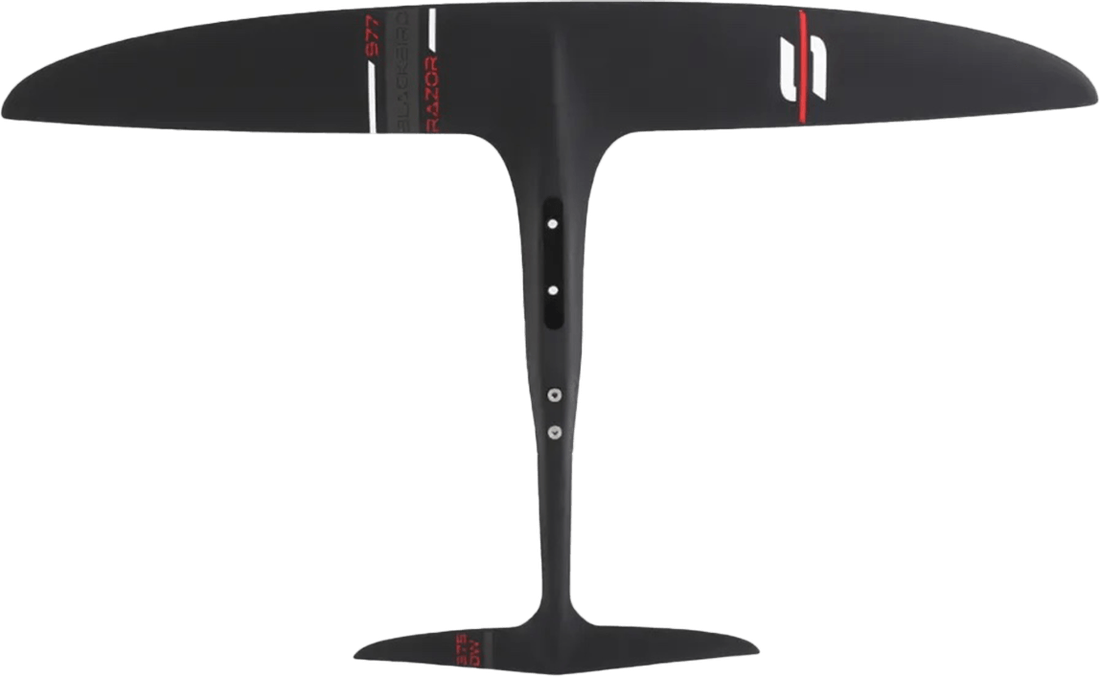
Sabfoil's high-aspect glide branch of the Blackbird line is pitched at downwind and prone surf with what they claim is “infinite glide and surprising pumpability for its size”. The Blackbird is constructed with a monobloc full-carbon construction resulting in a cleaner and lighter design that translates into enhanced performance and a more fluid experience on the water.
Tester notes
High-aspect foils usually force a choice: insanely efficient but lifeless, or playful and loose but lacking real glide. This is one of the first foils we've tried that genuinely feels like it bridges both worlds.
What stood out wasn't speed or lift – it was how easy the foil felt to trust. Multiple independent testers came back with the same word for it: cloud-like.
The efficiency doesn't come at the expense of feedback. The foil still feels alive underfoot, with clean rail-to-rail behaviour, natural carving and a surprisingly compact turning radius for the span. The integrated front wing and fuselage system significantly reduce flex and create an extremely direct connection, which you notice most during hard pumping and high-load turns.
Winging, it excels in light to medium wind. Early takeoff is excellent for the size, the stall speed feels lower than older-generation high-aspect foils and recovery from touchdowns is notably smoother. It rewards finesse rather than brute-force pumping. It is incredible how easy the foil makes linking small energy sections that would normally require aggressive pumping.
Downwind is where the foil arguably feels most at home, and it crosses extremely well into dockstart and flatwater pump foiling.
The main limitation is that the Razor 977 still demands decent technique. Intermediate riders will appreciate the stability, but the foil performs best when ridden actively and efficiently, and beginners moving up from mid-aspect freeride foils may initially find the long span and glide characteristics unfamiliar. The 977 is more about sustained flow than explosive acceleration.
AFS
FM Tested – Issue 29
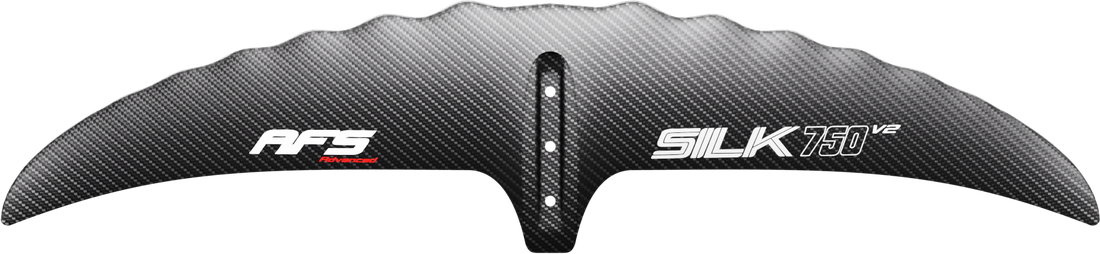
A refinement rather than a reset. AFS kept the original Silk's character and changed three things: a more pronounced break in the dihedral curve near the centre for progressive tip rise, redesigned tips for better tolerance when one lifts clear of the water, and a slightly raised aspect ratio for glide and grip through turbulent transitions. Laurent Borgna, who co-developed the Silk ranges, describes the goal as helping intermediates progress with more confidence while giving experts a new playground.
Tester notes
From the very first take-off, the foil feels remarkably balanced. There is no nervousness, no unpredictable lift. The foil immediately delivers a reassuring sensation of control.
Carving is definitely the highlight word of this foil. It rolls progressively onto the rail, holds its line beautifully and maintains pressure all the way through the carve, and it never feels like it's about to let go. Rather than feeling loose or overly playful, the Silk V2 always feels planted.
The foil stays flying comfortably at surprisingly low speeds while remaining extremely controllable, and it generates enough lift to get flying early without demanding aggressive pumping. As speed builds, the foil never becomes intimidating; it simply keeps accelerating while maintaining the same composed feeling. Small pumps translate into efficient forward movement rather than wasted energy.
The improvement in glide over the first generation makes connecting waves noticeably easier.
It's one of those foils that lets you focus on the wave rather than constantly thinking about your foot position or weight balance. The Silk V2 didn't impress me by being more extreme than the V1 but by making me feel comfortable enough to push harder and harder – and confidence is often the biggest performance upgrade of all.
Duotone
FM Tested – Issue 27
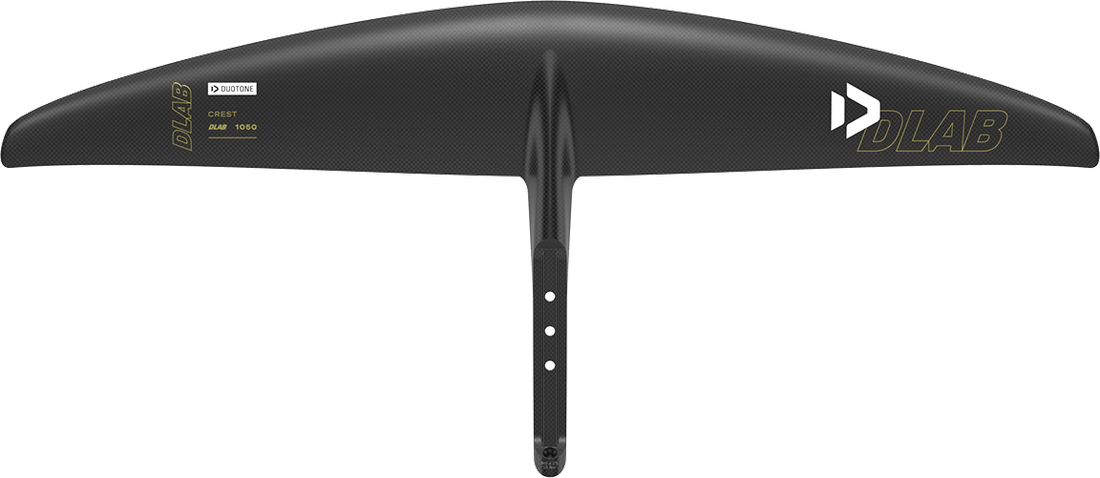
The Crest replaces the Glide, the Carve and the Whizz with one multi-purpose shape. D/LAB is the no-compromise construction tier: the front wing is merged with the front half of the fuselage, and the monobloc tails integrate the stabilizer into the carbon tail for the lowest drag possible, all in a high-modulus layup with optimised fibre mix and orientation.
Tester notes
An ingenious internalized bolt goes in at 45 degrees between the front wing and tail, holding them together as a plane set with no bolt head causing drag – they all crank down, and the 45 degree split across the plane set is seamless. The devil is in the detail, with all the bolts laser etched with their lengths, and suggested tail matches and torque settings inscribed on the front wing itself. A German level of organization. It's a slick and hydrodynamic system, as lightweight and rigid as anything else out there.
It has a gentle moustache turn up into the wingtips – a toned-down Whizz – and a plan shape sitting between the Glide and the Carve, though it loses that extended rear chord in the center section.
Winging at 90kg the 800 is a strong daily driver. It feels very neutral between the feet and back foot, and the foil feels lively and translates feedback well with no discernible flex through the system, even at 1050.
The 1050 came into its own in the formative stages of parawing torture. A longer board plus the Crest's neutrality helped us get to grips with the angry carrier bag, when you're often trimming balance as a beginner. With the motor it flat-water starts easily off a 33L board, and that same neutrality made for a smooth ride on and off power.
It's the most versatile and balanced front wing from the Duotone range – the ultimate no surprises, quiet, well-built daily driver that gets the job done with little fuss. Think of it as the oceanic equivalent of the Audi Savant and you won't be far off.
Slingshot
FM Tested – Issue 24
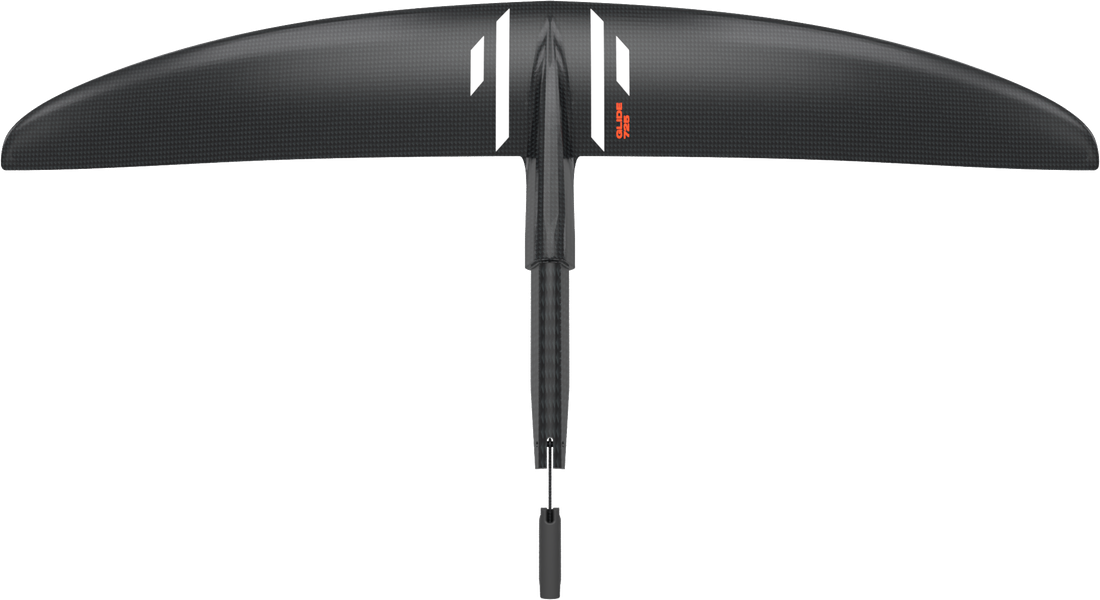
The one entry here that isn't really about a front wing. One-Lock is a screwless connection: mast, front wing and tail lock together with a single clipping mechanism that uses pressure as the retaining force, via a Dyneema string connected to a custom latching piece that lengthens or shortens depending on the tension needed. A triangular hole at the mast forces everything right side up, and there's an arrow printed on the mast in case you still get it wrong. Three years in development.
Tester notes
The screwless future is here! Slingshot has done what was thought to be impossible. It's simple, it's rugged, and most importantly, it works.
I tried to break it. Full setup changes multiple times a session, off the back of tow boats, and it worked every time without failure. Something about the newness of the experience created a level of enjoyment, and also secretly hoping you might stump the system. I accidentally put everything on backwards one time, and then saw they had run into this before, as there was an arrow.
Without screws I found a noticeable reduction in friction. It was a very smooth ride through the water.
We were in Chicama, one of the best foil waves in the world. In the mornings we would have smaller conditions because of the high tide, and it built through the day as the tide dropped – which is exactly the situation where being able to swap wings mid-session earns its keep. Not only is it possible to switch wings mid-session with no hassle, but it actually enhanced the session.
The Glide foils are similar to their previous Phantasm series – super fun and surfy, low stall speed, but more lift than a traditional surf-style front wing. I did find them a little slow on the acceleration. I ended up adjusting my cadence though, slowed everything down, and it worked fine. The Flow 800 feels made for velocity, though it has a little bit of a high stall speed – just gotta keep it movin'.
The short fuses are good at what they are made for, decreasing your turning radius so you can turn sharper, but my favorite was the medium-length tails. The second I got up on these I could feel the smoothness, and it really stabilized the system.
You make the wrong foil decision and you're stuck out there either over or underpowered. Those days are over. Bring out three foils, see what works best.




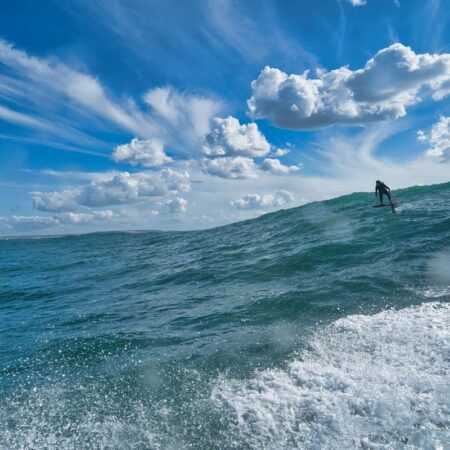
Jet ski, driver, board and foil, two hours at a time. Towtrips tow foilers into Atlantic swell on Portugal’s Alentejo coast, and their 2026/27 swell season opens this month.
READ MORE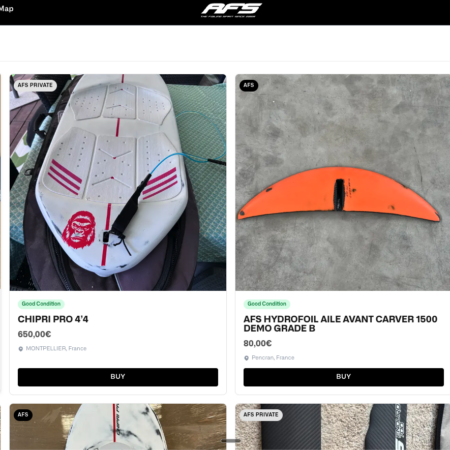
Second hand gear is important in our industry as it gives our first-timers their first crack! AFS have recently launched their “Second-Hand Marketplace” – let’s take a look. AFS opens its second-hand marketplace to riders and resellers. AFS, the French carbon foil manufacturer, has opened a platform dedicated to second-hand AFS gear. Private owners and
READ MORE