
When you purchase gear through links on our site, we may earn a small commission. Here’s why you can trust our tests and our affiliate partner.
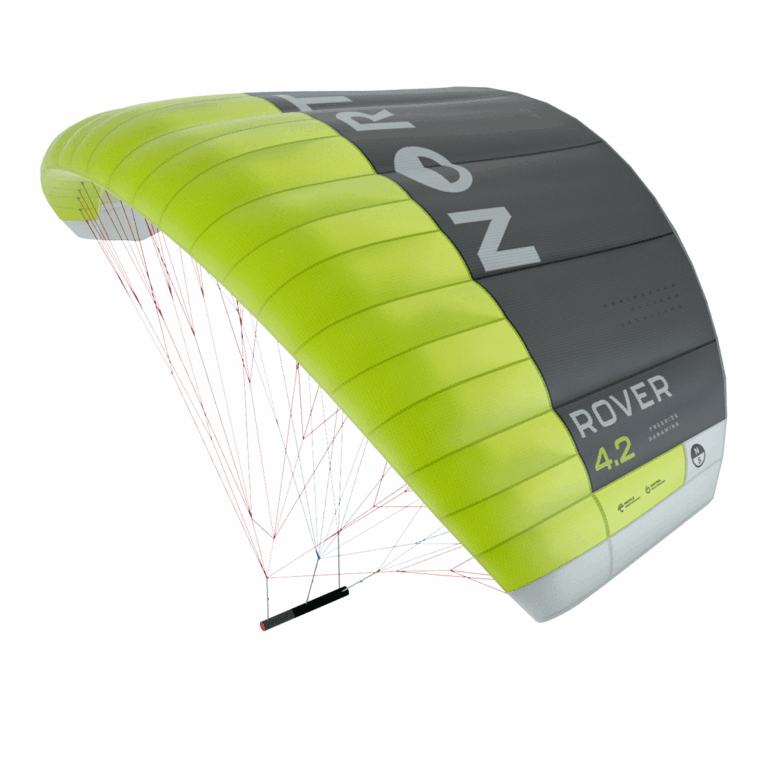
North has continued to invest in the parawing hype by launching their second-generation wing, the Rover. Building off the original Ranger, the Rover has some nice new features in a lightweight and functional design that will suit freeriders, waveriders, and downwinders. The Rover comes in a slim roll top stuff sack that is decently sized – however, riders will need to fold and roll the wing to effectively store in the sack.
Starting at the bar, the Rover has an ultra slim dowel style handle wrapped in a comfortable grip. This grip has a light diamond texture that has a nice balance of feel and grip when wet. Lacking any bar ends, the leader pigtails are directly connected to the center of the bar which creates a very sleek, lightweight, and minimalistic design. The bar itself has some light branding, but few distinguishable markings to identify orientation at the bar itself.
Moving up, the Rover has unique colored A, B, and C lines which do assist with orienting the wing for a re-deploy. The line length is on the longer end (for reference we have the 4.2m on test), so riders with shorter arms may need to do some creative stow and deploy techniques when handling the Rover. This longer line length does provide a nice little boost in power and reduces the twitchiness compared to shorter line parawings. The lines are a heavier duty material that had just the right amount of stiffness to mitigate tangles compared to ultra-thin lines.
Finally at the canopy, the Rover has some light structural elements in the leading edge to help create and maintain shape. The extensive bridle provides ample support to resist deformation and distributes power evenly through the canopy. The colorway we tested has a yellow leading edge with a black trailing edge which makes it super easy to identify wing orientation when stowing and redeploying.
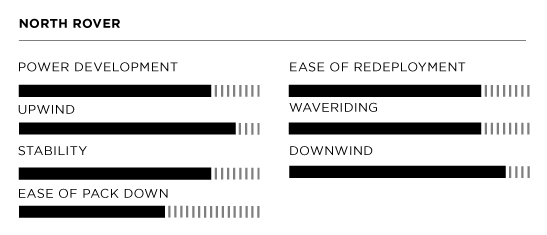
During testing the Rover comfortably handled a variety of conditions and wind ranges, feeling most comfortable in the mid to upper teens and topping out around low 20mph wind gusts. The general freeride and upwind performance is truly excellent, and the longer line length allows for nice stability and control in the window. This longer line length did make the wave riding stowing and redeploy a bit less consistent, as there is just more line length to catch or tangle, but after a few tries the technique is relatively easy to figure out. The sailing and upwind performance was great, making a very easy tack to return to the top of the lineup after a long wave ride.
Downwinding is a breeze, on par with many other parawings, however due to the slightly larger size and material, taking a little more time to cleanly pack down the Rover for a long downwinder will make storage more comfortable. Redeploying consistently from a pack can be tough, but the stiffer and thicker lines chosen by North do a great job at mitigating any downtime to untangle during a re-deploy mid run. The lightweight bar provides a great connection and feels like a magic wand to control the parawing, although some orienting grip feeling or color marking would be nice, especially in wave riding where the redeploy window can be short.
The Rover parawing is a great choice for riders who want a wing that slightly favors freeride and general sailing performance yet can handle waveriding or set up for an epic downwinder.