
































When you purchase gear through links on our site, we may earn a small commission. Here’s why you can trust our tests and our affiliate partner.
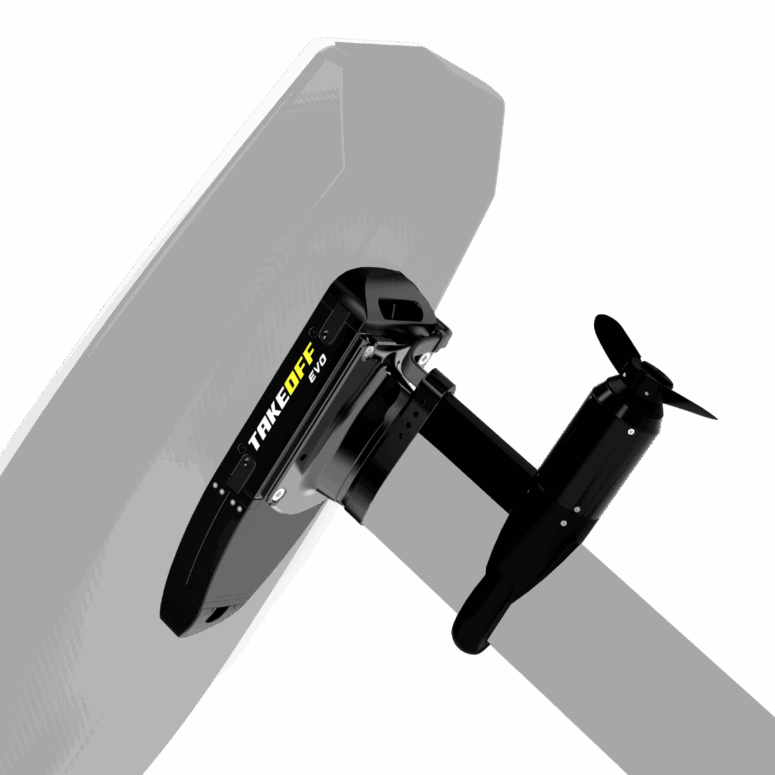
One of the latest development races in the foiling game has been the evolution of the foil assist, combining the power and ease of access of an e-foil, with the surfing and freedom of non-powered foiling. The new Manta Foils TakeOff Evo foil assist system brings some new innovations to the foil assist world.
One of the most unique features of the new TakeOff system is the backpack battery system. Those familiar with the assist world have seen a few homebrew fanny back or backpack style battery mounts, but Manta is one of the first to come with a refined, production-ready backpack battery system. One of the complaints about board mounted batteries is the added swing weight and performance change to the board. Adding several pounds of battery to the board can significantly change the ride profile and performance, so moving this weight onto the rider swings the weight balance back to a traditional non-powered foil system.
The batteries have a unique mount, with two batteries assembling in a north/south arrangement inside an H shape receiver. One of the coolest design elements here is the capability to mix and match battery sizes to optimize weight to ride time. Meaning a rider could put a smaller travel battery on the top half of the receiver, and a larger extra range battery in the bottom, and shave a little weight for just the right amount of ride time. These batteries are a fully sealed and filled, “airless” design and have nice waterproof gasketing.
The backpack itself is a very high end padded harness, with many components feeling closer to an impact vest than a backpack. One of the immediate concerns with carrying this extra weight on the rider is being able to float with the extra weight. The backpack provides a degree of buoyancy and offsets the weight from the batteries. During testing the travel batteries were used, and the backpack itself was fully buoyant with these smaller cells. Larger batteries should be expected to be closer to neutral buoyancy. The Manta backpack also has a universal attachment plate inside, allowing riders to use other foil assist platforms with the Manta backpack. The power cable has an integrated board leash which is a very strong bungee style, and includes a neoprene sheathing to keep all cables secure and consolidated when riding.
The other components of the Manta TakeOff Evo were again thoughtfully designed, although not extremely dissimilar to other foil assist systems. As tested, the motor pod was mounted with a nose cone and external cable/fairing which does require some cable taping. Many brands are developing integrated mast systems, including Manta, however one was not available for testing. The TakeOff motor is a fully sealed unit with no removable parts. This motor is quite large both in length and diameter, and does provide a significant amount of power. Finally, Manta has redesigned their controller offering a high end feel with a large LCD screen that provides critical information including power level and battery life. These indicators were large and easy to read when on foil and in direct sunlight.
Testing on a 5’6 mid length, 850 foil, small 1-2’ waves: the first impression putting on this backpack was a bit strange – it was unsettling feeling the weight on the body and getting ready to get into the water. Interestingly enough, as soon as you get in the water and float, the buoyancy of the backpack kicks in and the weight fades away. The controller functionality and safety is excellent, with an auto-locking digital safety preventing accidental motor engagement. Activating the motor required pressing a button which then prompts riders to engage the power, otherwise the controller defaults back to a locked state after a couple seconds. One of the secondary benefits of the backpack was the receiver is mounted up on the rider, so there is no interference with carbon boards, or smaller boards that sit underwater. The remote never lost connection through the entire time testing on a full carbon board.
The power cable running from the backpack down to the board was not very noticeable or impactful when riding, it did take a second to figure out how to arrange this before getting up, but after a couple tries it was easy to find a positioning that was out of the way.
During testing the motor was set to level 4 out of 10. This was more than enough power to get up on a mid-length board. Riders on smaller sinker/prone style boards will appreciate the capacity for extra power from the larger motor. On foil, even at level 4 there was an excess of power and frequently was riding at 60-70% throttle on this reduced output level. When touching down or hitting the motor pod while gliding, there still is a moderate amount of drag when contacting the water, however that is to be expected as there is simply a massive difference in surface area.
The largest sensation change was having the battery on the back of the rider. This really makes the board feel closer to a non-powered setup, although the motor pod and associated hardware does still add a noticeable amount of weight. During more aggressive turns really trying to lean hard into the foil, having the extra weight up on the rider’s back did change the weight balance a bit through the turn, and had a noticeable feeling of wanting to fall backwards. After a few waves it was easy to find the right balance point and leverage to work around this weight change and really have a fun wave riding experience.
Overall the Manta Foils TakeOff Evo system and backpack is an awesome iteration on the foil assist market. The unique backpack style battery & receiver mount mitigated the weight on the board, and provides a great alternative for riders who are on full carbon setups. This paired with the ability to mix and match battery sizes, as well as the extreme power from the motor makes the Manta TakeOff Evo a strong contender for anyone interested in a foil assist system.