
































When you purchase gear through links on our site, we may earn a small commission. Here’s why you can trust our tests and our affiliate partner.
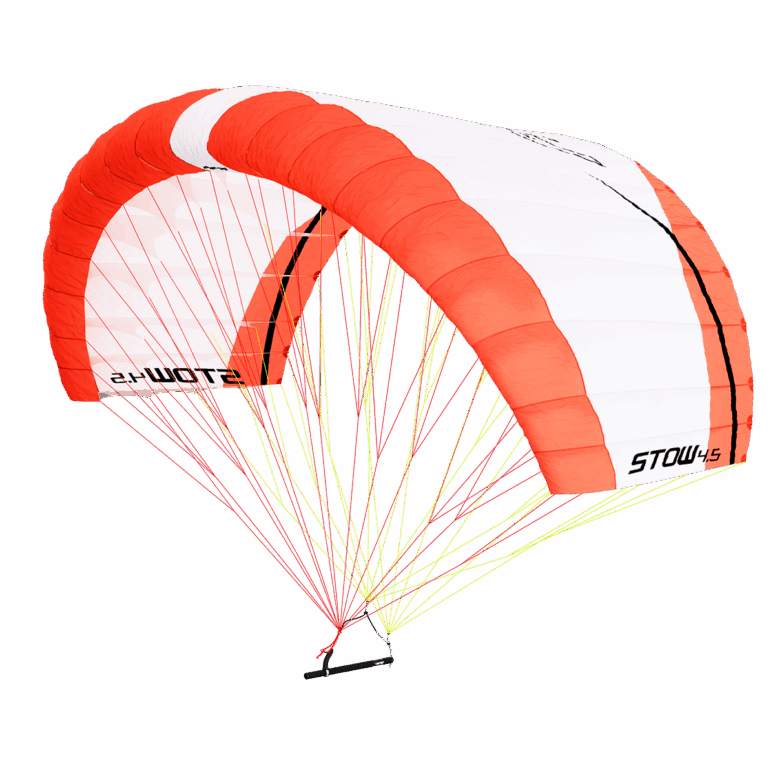
With parawings, first impressions matter. Unlike a wing or a kite, you often know within the first few seconds on the beach whether a session is going to be enjoyable. As soon as you lift the parawing overhead, you immediately feel its weight, balance and natural tendency to fly. Good news: the latest AFS STOW gave me that reassuring feeling straight away. Light in the hands, stable overhead and surprisingly powerful for its size, it immediately felt like a parawing designed by riders who truly understand the discipline.
The first thing that stands out is the weight. The STOW feels incredibly light the moment you pick it up. That translates directly onto the water, where the wing naturally wants to stay in the air instead of constantly asking for rider input to keep it above your head during takeoff. Combined with its relatively compact 2.72 aspect ratio, it delivers a very intuitive feeling that should appeal to both newcomers and experienced riders.
I tested the 3.5m in various conditions from 15/18 knots to more than 20knots, riding a 60L board with an 800 to 675 foil. Honestly, I expected to work much harder to get going, especially with a 3.5 in little more than 15 knots. Instead, the STOW delivered impressive low-end pull, allowing me to get onto foil without struggling. The power comes on progressively and feels very manageable rather than aggressive. That strong bottom-end is probably one of the parawing’s biggest strengths.
Once flying, the STOW continues to impress. It feels remarkably light overhead and requires very little effort to keep flying. It drifts naturally and remains stable even when temporarily unloaded. This reduced swing weight makes long sessions noticeably less tiring and contributes to a very relaxed riding experience.
One of the most interesting features is AFS’s Power Loop System – activating the system noticeably softens the overall pull by pulling the front line and extends the high-end range. Instead of becoming overpowered, the wing feels calmer while maintaining excellent upwind performance. Also one feature I absolutely loved was something surprisingly simple: the drainage holes integrated into the wing tips. It sounds like a small detail, but anyone who has been parawinging knows the struggle when the tips catch the water. It’s one of those thoughtful design choices that genuinely improves everyday use.
There is really only one thing I would have liked to see included: a harness line. Considering how useful harness riding becomes on longer upwind runs, I believe this is an accessory many riders will want from day one.
AFS approached the STOW with a clear objective. Not to build the most radical parawing on the market, but one that removes many of the frustrations commonly associated with the discipline. After several sessions, I think they’ve largely succeeded. The STOW combines excellent low-end power, extremely light handling, intuitive packing, and clever practical details into a package that feels mature from day one. It’s simply a very easy parawing to enjoy.