



New 2027 Starboard VIVA Wing
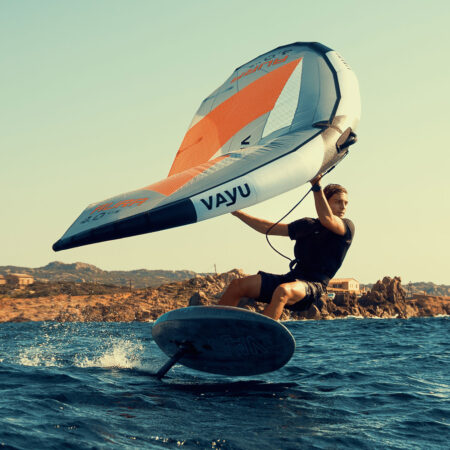
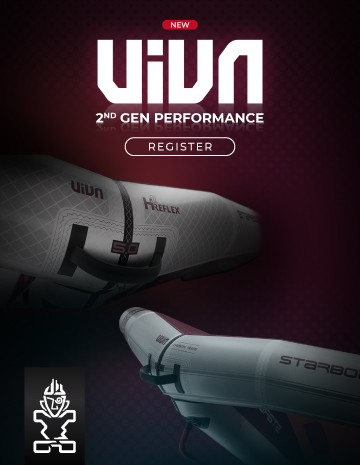
Starboard's 2nd Gen of the VIVA Wing is here!
READ MORE
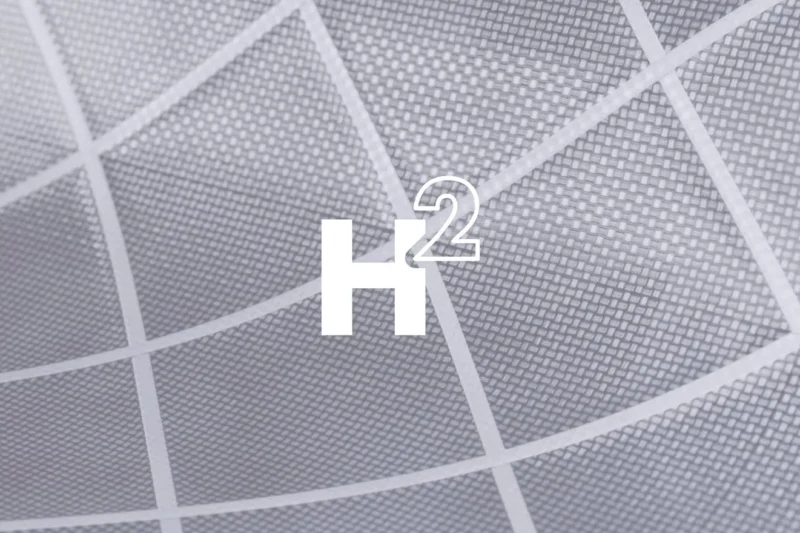
Starboard introduce their 2nd Gen Woven Ultra-PE: H2. The’r 2027 wing technology just levelled up. Here’s the details…
Starboard Product Manager, Roman Borisov joins Foiling Magazine to break down Starboard’s latest 2027 wing innovations.
Roman explains the new H2 Ultra-PE material, the H2 Reflex and Carbon Frame constructions, the all-new Tool-Free Anchor Boom system, and how these innovative technologies are shaping the next generation of Starboard wing products.
1) H2 AIRFRAME MATERIAL
What was the main goal with H2, and where did you feel the existing Ho’okipa material could still be improved?
The main goal was to find a better balance between weight, structural response and durability. Ho’okipa already gave us excellent stiffness and stability, but we saw an opportunity to reduce weight and improve how quickly the airframe recovers after deformation.
With H2, we wanted the frame to feel lighter and more responsive without losing the solid, connected feeling riders expect.

You’ve increased the Ultra PE (ultra-high-molecular-weight polyethylene) content by 30% while reducing weight by 30% (H2 = 85 GSM vs Ho’okipa = 120 GSM). Was that a difficult goal to hit without compromising the durability?
Yes. Making a material lighter normally means removing fibres or reducing its structural margin. We therefore had to use the Ultra PE fibres more efficiently and carefully control their orientation, rather than simply adding more material.
One of the most important areas was the strength of the segment seams. We developed an extra-wide seam reinforcement, which is visible through the H2 material. We evaluated several constructions through extensive laboratory and practical testing, including repeated loading, folding and long-term use.
The final construction delivered exceptionally strong results. The wider reinforcement also makes every segment connection stiffer and more stable, giving the complete airframe a more solid, connected and responsive feeling on the water. So the solution to the seam-strength challenge also gave us a performance benefit, which was a very welcome bonus.

You state it’s about the reflex, not the flex. Tell us about the reflex response of this material.
Flex describes how much a material deforms under load. Reflex is about what happens next: how quickly and accurately it returns to its original shape once that load is released.
For a wing, that recovery is extremely important. H2 responds quickly after pumping, gusts, jumps and changes in loading. Instead of feeling soft or delayed, the frame returns to its designed profile almost immediately. The rider feels this as a more direct and controlled response.

At 85gsm, H2 is significantly lighter than both Ho’okipa and regular Dacron. Where and when are we going to notice that weight saving when we’re out riding?
You notice it most during transitions, pumping, flagging and in lighter wind. A lighter airframe has less rotational inertia, so the wing is easier to move and responds more quickly to rider input.
It also feels more neutral when flagged and requires less effort during longer sessions. On the larger sizes, where there is naturally more airframe material, the difference becomes even more noticeable. After a long session, your shoulders may appreciate the engineering even if they don’t know what 85gsm means.

2) CARBON FRAME REINFORCEMENTS
Where did the idea of adding full-length UD carbon strips to an inflatable frame come from?
We wanted to increase stiffness along specific load paths without making the entire airframe heavier. Instead of adding weight everywhere, we studied where the wing was actually deforming and where a small amount of reinforcement could have the greatest effect.
UD carbon is very efficient when its fibres are aligned with the load direction. That allowed us to reinforce the strut exactly where it was needed while keeping the additional weight very low.

The strips only add around 5g per linear meter of reinforcement, but what does that relatively small amount of carbon do to the character of the wing?
Five grams per metre doesn’t sound like much, and that is exactly the point. The carbon is effective because of where we place it and how the fibres are oriented, not because we use a large amount of it.
The strips reduce unwanted longitudinal deformation and help the strut maintain its designed shape under load. For the rider, this creates a more direct connection between the boom, strut and leading edge. Pumping feels more immediate, power delivery is cleaner and the wing remains more stable when loaded.

Does the added stiffness also give you scope to reduce weight or material elsewhere in the wing?
Potentially, yes. Targeted reinforcement can be more efficient than increasing the weight or stiffness of the entire airframe.
However, we have to be careful. We don’t put the wing on a diet just because the first prototype feels stiff enough. Any lighter construction still has to pass fatigue, impact, folding and long-term durability testing.
The immediate benefit of the carbon strips is better-controlled stiffness. Once durability is confirmed, we can explore whether they also allow us to optimise weight elsewhere.

3) TOOL-FREE ANCHOR BOOM
What was it that you wanted to improve most about the existing boom connection?
We wanted the connection to be simpler, faster and more secure, while removing the need for tools and loose hardware. It also needed to position the boom consistently and create a stronger structural connection with the strut.
For the customer, the benefit is straightforward: faster installation, fewer parts and no small screws or tools to lose on the beach. For us, the more important performance benefit was making the boom feel like a properly integrated part of the wing.

The new system actually tightens as the wing inflates. Was using pressure to lock the boom in place part of your original concept?
Yes. We wanted the inflation of the strut to become part of the locking system. The boom is easy to install while the wing is deflated, and as the strut reaches the correct pressure, it tensions the attachment and secures the boom more firmly.
It is a simple idea with fewer parts, but arriving at a simple solution usually requires testing quite a few complicated ones first.

What difference does transferring the load around the lateral centre line of the strut make to the feel of the wing?
Instead of hanging the boom from one small insert on top of the strut, the Anchor Boom is supported by two Dyneema cords extending from the lateral centre points on both sides of the strut. These cords hold a much wider boom connection, effectively anchoring it around the inflated structure.
This changes how the load enters the wing. Rather than pulling on one small area, the rider’s force is distributed around both sides of the strut. The connection can therefore handle tension, bending and twisting more effectively, making it significantly stiffer and more stable.
You can feel the difference immediately on the water. The boom and airframe behave more like one structure, so every pump and steering input is transferred more directly into the wing. The result is a more solid, precise and responsive feel, particularly during pumping, acceleration and powered riding.

Looking at H2, the carbon strips reinforcement and the Anchor Boom together, is there a wider philosophy going on here about making the whole wing behave more like one unified structure?
Yes, absolutely. These developments are all connected by the same objective: making the wing behave as one integrated structure rather than as a collection of individual components.
H2 gives us a light airframe with fast recovery. The carbon strips control deformation along the strut, and the Anchor Boom transfers the rider’s load directly into that structure. Each feature has its own benefit, but the bigger improvement comes from how they work together. That is when one plus one plus one becomes more than three.

— Roman Borisov, Starboard Product Manager
Read more over at STARBOARD