



Uploaded: DRIVEN | JASON SAUER
We asked Jason for a quick Q&A about his Driven episode - he gave us an intensely honest, unfiltered memoir. Here is his journey through addiction, amputation, and finding true independence on the water.
READ MORE


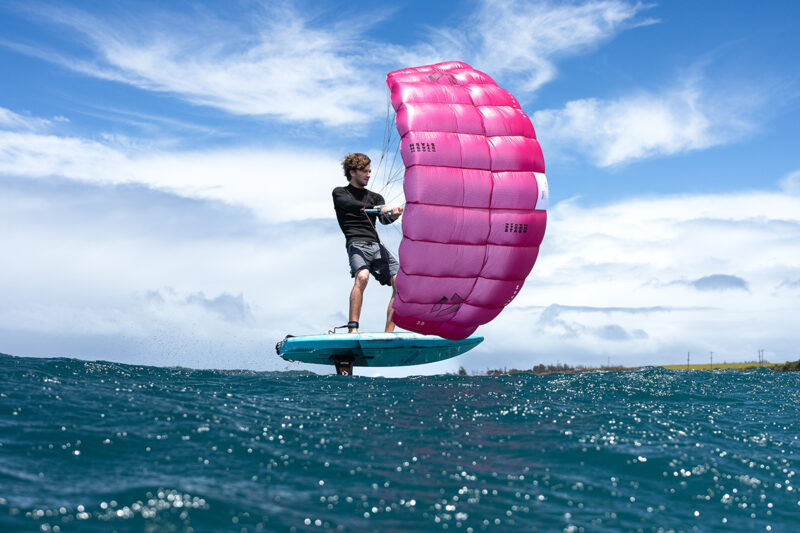
In terms of in-the-field experience, Duotone team rider and shaper Jeffrey Spencer is one of the most experienced in the parawing vanguard. A natural go-to for us then to get our first parawing-based tech interview…
Photos Toby Bromwich
Jeffrey, congratulations on the Stash, and being the first parawing we’ve covered in the tech pages of Foiling Magazine. Do we think it’s a discipline that’s here to stay?
Absolutely! We are already seeing a lot of people having fun parawinging and it is just the beginning. The designs will continue to improve quickly which will open up even more possibilities. This is definitely a discipline here to stay and I am excited to see what advancements are made in the sport. For me the coolest part of parawinging is having the ability to pack it away and relaunch it while you are riding. Downwinding and wave riding with a normal wing is fun but when you are able to have nothing in your hands or in the way of turns, the feeling is next level. Riding with the parawing powered allows you to catch waves quickly and makes it easy to get back upwind compared to paddling. Because parawings pack up so small they are also amazing for traveling. You can bring an entire quiver with you using the same amount of space as one regular wing!
How difficult was it to design a parawing, and who’s behind the Stash?
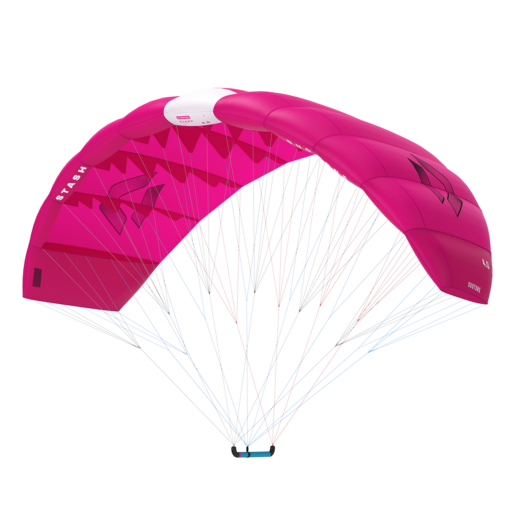
The design of the parawing has similar concepts to kiting and winging but also has many unique elements. Ken Winner is the designer and thanks to his experience in kite design the early Stash prototypes were already working well. Finn and I also did a lot of testing to find the best balance of stability, depower, and packability. We worked with Duotone’s product manager, Max Pajank, to find lightweight materials that will pack away as easy as possible when you are stashing the Stash. One cool feature that we found worked well in testing is the double skin tips which add stability when flying both powered and depowered.
How do you go about designing a control system for a parawing?
Having a good control system is one of the most important aspects of the parawing. For the Stash we made a custom molded handle that is similar to the handle on the Duotone wings. It has the same easy to hold diameter and shape, and the curve in the front is awesome for holding the front of the bar. You can also slide the center lines forward or back depending on what feels best for the conditions. The handle is easy to pack away and is rounded everywhere to avoid the lines catching on it.
Talk to us a little about the materials you’ve used in the Stash and why…
The canopy of the Stash is made out of 30-gram nylon and the lines are lightweight Dyneema. This gives the Stash an incredibly light feeling and it is amazing for packing it up as small as possible which is one of the most important features.
Who do you see being first to adopt the world of the parawing?
I see a lot of people initially using the parawing for downwinding. It has the potential to be a great way for many people to learn faster than getting up using a paddle. Having the ability to ride upwind and then surf downwind also saves a lot of time and planning compared to a traditional downwind run and it allows you to have longer sessions! I have also seen many people riding in the surf here on Maui with a parawing instead of a normal wing. That feeling of packing it up, carving turns all the way to the beach, and relaunching and riding back to the peak is nonstop fun. I have to say though, you should be a bit careful with wipe-outs in breaking waves to not get tangled in the lines.

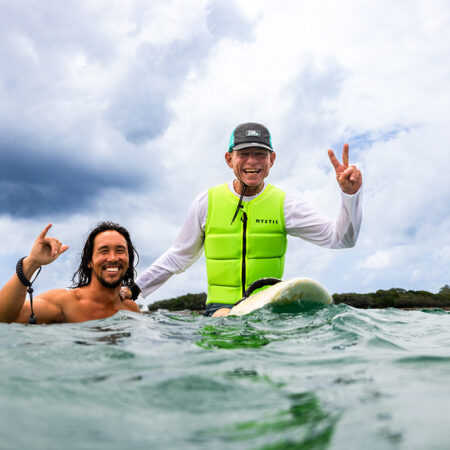
We asked Jason for a quick Q&A about his Driven episode - he gave us an intensely honest, unfiltered memoir. Here is his journey through addiction, amputation, and finding true independence on the water.
READ MORE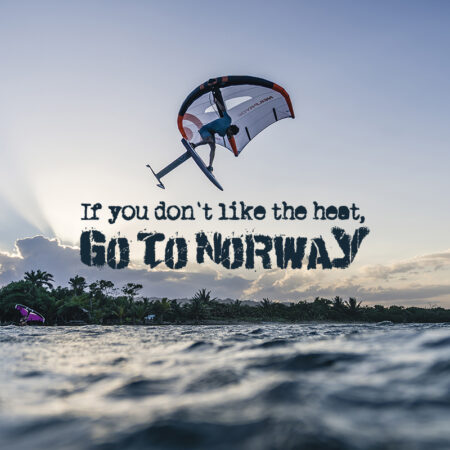
Two weeks in Cabarete gave the NeilPryde and JP-Australia crew warm water, steady trades, and everything from flat water to reef waves - the ultimate playground for their 2026 photoshoot.
READ MORE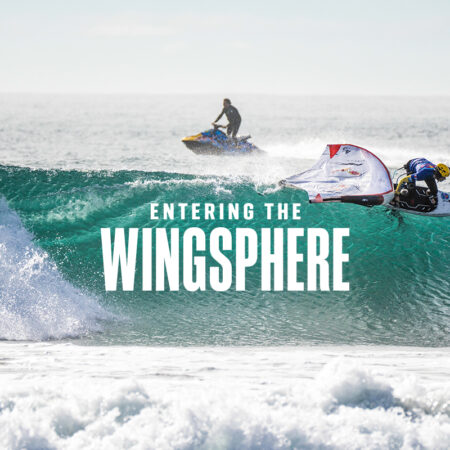
Three months after a serious hand injury threatened his season, Axel Gérard secretly travelled to Chile for Red Bull’s inaugural Wingsphere. Against the world’s best, he fought through a razor-thin final and delivered the highest score of the competition to claim the title.
READ MORE