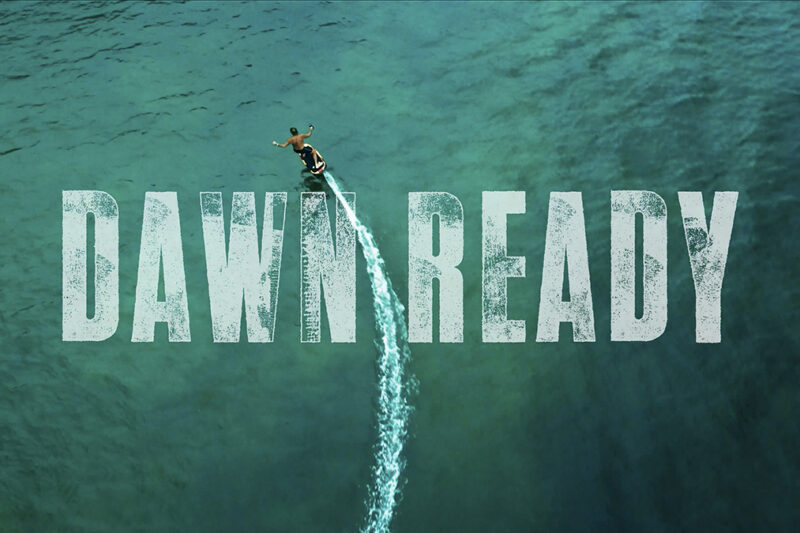
Uploaded: Dawn Ready
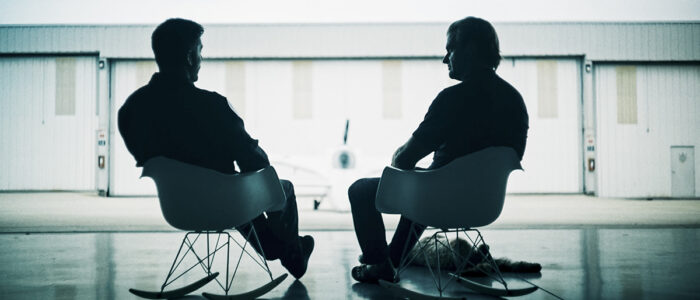
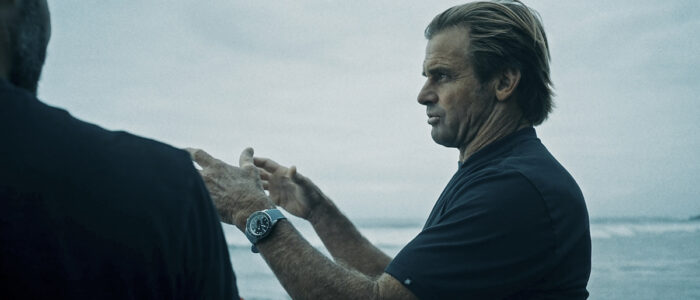
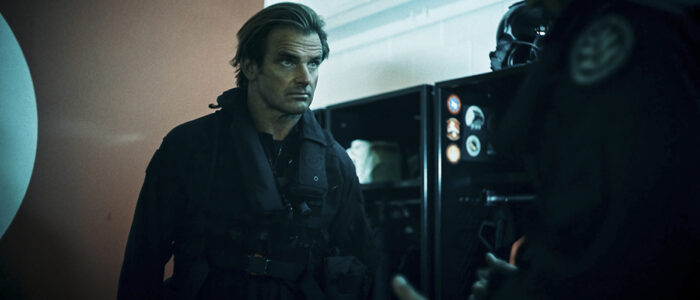
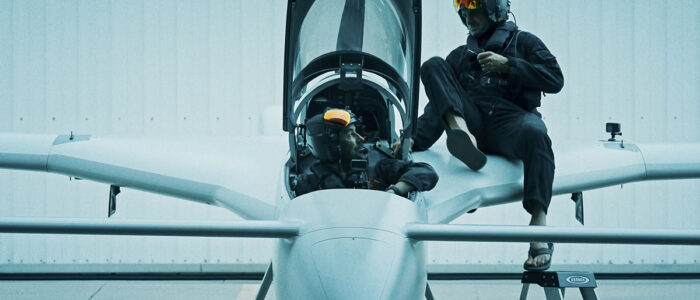
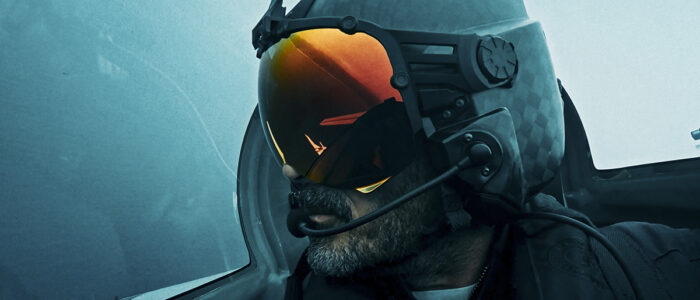
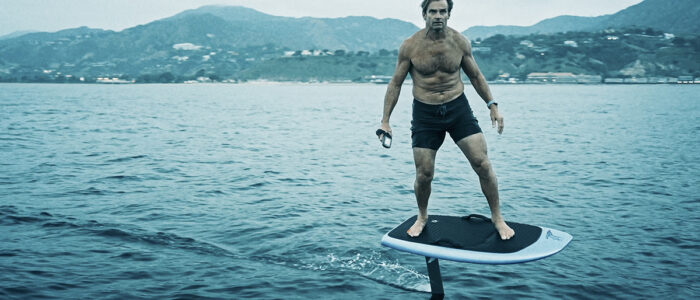
Fans of both foiling and high-speed jets will immediately appreciate a short film that appeared recently, featuring legendary waterman, big wave surfer and contemporary foiling trailblazer, Laird Hamilton, and fighter pilot turned Red 6 founder and CEO, Daniel Robinson. In it, both men converse with each other about risk, mindset, and that ever alluring “flow state”. It’s a stylish piece of work… We caught up with Laird and William Cawley, the film’s writer, to get a little more background to the whole project.
William Cawley (Writer)
William, the film weaves Laird and Daniel's narrative with some pretty stunning visuals of eFoiling and flying – what was your initial vision for how foiling would feature within the story?
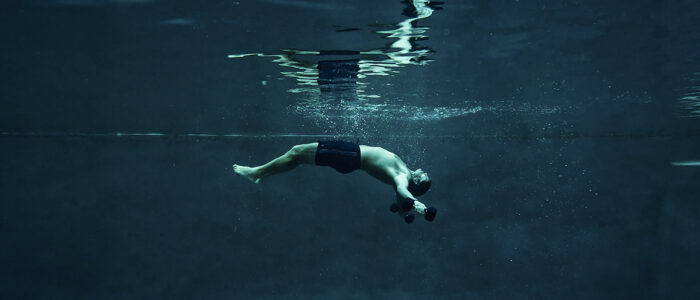
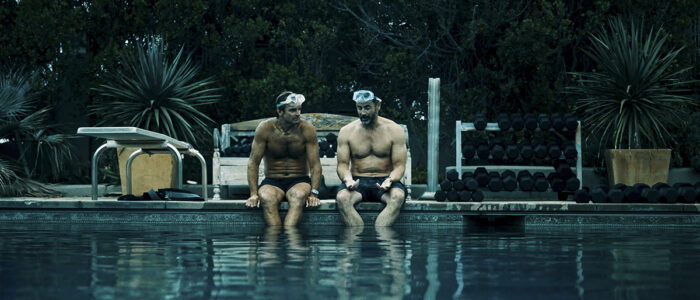
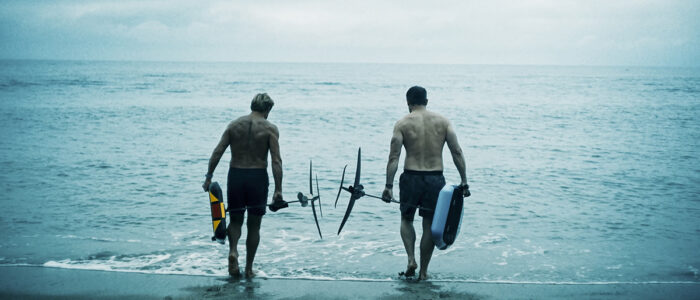
The story came to me as one central filmic thread that weaves two stories, so the edits can go back and forth to both subjects, but the central story keeps unfolding. The comparisons start with two modern day heroes that need to be ‘ready to go’, either for a swell or for military maneuvers. So training is probably 90% of their day, and innovations within training have a huge impact on that readiness. Their mindset and analysis of risk is also exactly the same, and at the forefront of every decision. Equally, foiling is flight, so the foil wing and the plane are nearly identical, the sky and clouds present the same ‘playscape’ as the ocean and waves, as well as the control system for banking, stalling and so on. So, the film was conceived and told equally between flight and foil.
The twilight foiling/flying scenes are kinda hypnotic. Was it intentional to do it in that kind of lighting?
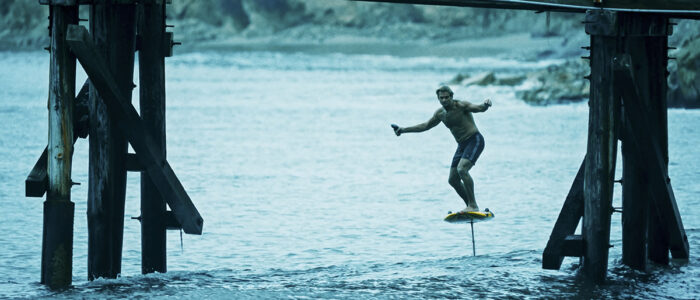
On a low budget film, and with a lot of favors being asked, you need to commit to a day to shoot and go for it! Our original intention was a dawn shoot, with very golden, Californian lighting. These conditions were not achievable, and the day was overcast. So we pivoted to a more Matrix, Mission Impossible vibe… dark and crunchy. Added to this, our ocean shoot was at the end of the day and light was fading, so again, more challenges. Ultimately we had more than 15 different cameras all capturing a mixture of light drama! The secret then becomes the job of an expert colorist, and we had the very best, producing this gnarly teal and orange vibe that glues it all together.
How closely did you collaborate with Laird and Daniel on the script and the tone of the film? Was there much improvisation once filming began?
I had a storyboard, a shot list and five locations. I know both the guys very well and wanted a very natural, unscripted conversation. So beyond my original treatment, I only brought them questions and topics that spoke to the concept, and in fact they chatted for a lot more time than featured. The collaboration was more around the foil and flight sequences, where both men have very strict protocols and exceptional experience in “producing” their performances. This is also where improvisations have to accommodate safety first, and then the filming challenges.
The guys discuss getting into that “flow state” in the film with their respective pursuits. Is this something you can relate to in your own line of work?
Not at my desk job per say! But I’m a windsurfer and a snowboarder and without doubt I have had extraordinary moments of reaching the very edge of control where my mind has surrendered to the thrill, the peace, the precision without conscious thought, and then you experience a flow state. A period of your highest performance, silence and with no concept of time!
Foiling’s presence in the film feels quite symbolic. Was it important for you to explore that evolution of waterman culture to such a contemporary point through Laird’s journey?
I’ve been Laird’s business partner for nearly 12 years. I have been immersed in his constant tinkering with surfing ‘tools’ and the years of pain and development that has led to foiling today. He believes without any doubt that foiling is the most efficient wave riding format that exists, to the point where he rarely strays off the foil these days. There will always be other opinions, but foiling is as pure as any surfing experience.
Finally, the tagline for the film is by Muhammad Ali: “The Man Who Has No Imagination Has No Wings”. Tell us why you chose this line and its significance?
Muhammad Ali is a true hero to Laird, for many reasons. But he has always loved Schulke’s photo of Ali appearing to be pool training. Laird is, at his core, an innovator, he has enormous imagination and that has led to invention and in turn distinction. His career ‘took flight’ very early and does not seem to be landing anytime soon. So this quote is very befitting.
“Flow is this moment of stillness, despite the movement and speed. It’s when you’re no longer consciously thinking – you’re reacting purely on instinct, on experience.”
Laird Hamilton
💎 Premium Content Ahead! 💎
This is premium magazine content, usually only available to our subscribers, but you can access it for free when you join our mailing list!
(Already subscribed? Simply enter your email to unlock all magazine features now)
*You will receive our weekly Friday Pump newsletter, plus the latest features, gear tests and giveaway announcements.
Laird, had you met Daniel prior to making this film?
No, I hadn’t really connected with him before the project. I think we may have crossed paths briefly, but it was really this film that brought us together. That’s when I got properly introduced and connected with him.
You and Daniel seem to find common ground in your mindset and philosophies, especially when it comes to risk management. Was it easy to relate to each other in that respect?
Yeah, it was very natural. And I find that often with people who operate in high-risk environments – there’s an underlying commonality, whether it’s aviation, surfing, mountaineering, whatever. The details are different, but the mindset is similar.
I’ve always believed that life is a formulaic process – there’s a formula for success and a formula for failure, and it crosses disciplines. So someone like Daniel, I feel more aligned with him than I do with, say, a typical surfer. People assume I relate to all surfers, but not really. I relate more to people who are on the edge of things, who have a technical discipline and a process to what they do.
Part of the conversation you have with Daniel centers around “flow state” and the speed of the unconscious mind versus the speed of the conscious mind. Can you tell us a bit more about what you consider to be that flow state, and do you think that state of mind can be found when foiling?
Absolutely. In fact, I had a couple of moments just the other day foiling where I was in that state. Flow is this moment of stillness, despite the movement and speed. It’s when you’re no longer consciously thinking – you’re reacting purely on instinct, on experience. You’re not saying, “lift my foot, shift my weight”. You’re just “doing”.
Speed brings it on. So does risk – an imminent threat puts you there. I think that’s why we love speed as humans. Surfing and foiling both give you that – they’re forms of flight, really. Especially with foiling, you’re flying silently, almost frictionless. When you’re deep in it, it stops being something you’re “doing” and becomes something you “are”. That’s the real shift – when action becomes automatic, almost subliminal.
Kind of where the unconscious mind starts to take over…
Yeah. So it just takes over. And then you can be in a state of consciously being engulfed by the sensation, the feeling of it. That’s why they call it flow state, because you’re just in the feeling of it and not in the act of it.
There’s a section in the film where you and Daniel get in the water to foil together. Was that Daniel’s first time on an eFoil? How did he get on?
Yeah, that was his first time on an eFoil. We were out there together and I was giving him some pointers – helping him find the balance, that kind of thing. I think he actually really enjoyed it.
It’s a great way to learn, especially with the throttle doing some of the work for you. It removes one of the harder variables when you’re starting out. Behind a boat is another good method – that’s how a lot of us learned in the beginning. You get that stability from the handle, and it helps you get the feel before you transition to more dynamic setups.
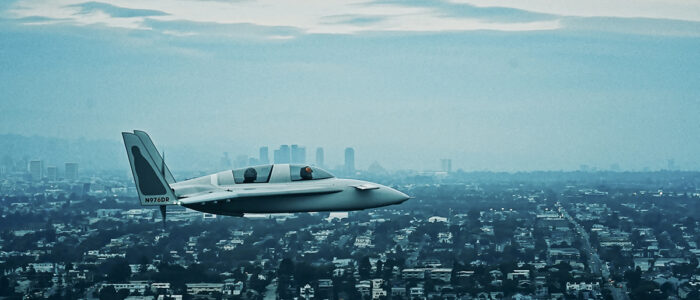
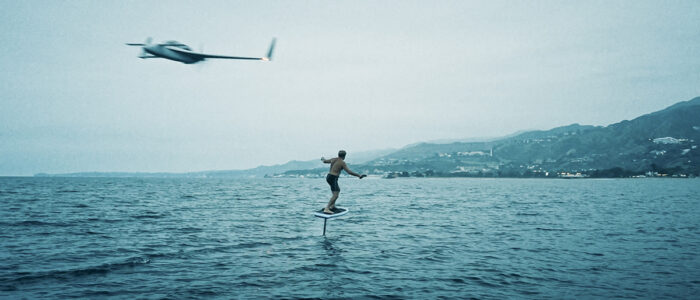
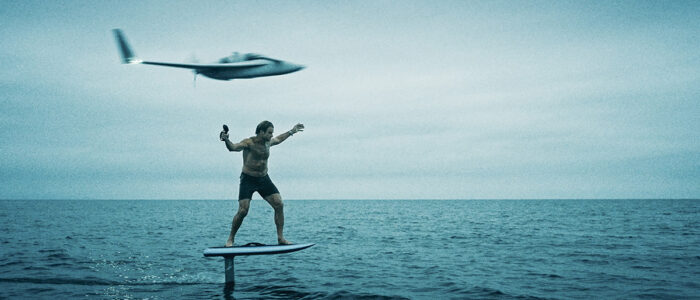
Tell us about filming your foiling sequence and Daniel’s low-altitude flight – was that filmed in one shoot, or a few?
That was all shot in one session. Timing was everything because Daniel was moving so fast – you had to be in the right place at the right moment, as the timing was everything. And then also just the confidence in him that he’s not gonna hit me.
But I trusted him. That kind of trust comes from experience – I’ve worked with great helicopter pilots before, and it’s similar. When you know the person is calculated, precise, and in control, you can relax into it. If I’d sensed any sketchiness, I’d have asked him to stay higher or keep his distance, but Daniel’s a pro. That’s why he can do what he does – and keep doing it.
Yeah, that looked pretty close when he flew past you…
It was, but as always, it’s about perceived danger as well, right? So a lot of times, it’s more about the perception of the danger than the reality. Things can look more dangerous than they are, and of course things can look less dangerous than they are.
The lighting in that foil/flight sequence is mesmerizing…
Yeah, that was dusk. That golden light really brought something special to the shots. The atmosphere it created, especially with the jet passing overhead, was pretty unique.
What do you hope people take away from watching Dawn Ready, especially those new to foiling or even surfing?
For me, the film carries some beautiful metaphors – the conversations, the flying, the energy of it all. Foiling is another form of flying, and one that’s a lot more accessible and less expensive than aviation. You don’t need a tower, or a runway, or a pilot’s license.
Ultimately, like most of the things I do, it’s just to bring some sort of appreciation to it – not just for the act of foiling, but for the incredible things we get to do as humans. If someone watches Dawn Ready and walks away feeling inspired to try something new, then I think that’s a win.
Finally, it looked like a couple of Lift Foils setups you were riding during filming. Can you tell us what setups you had out there?
Yeah, I think we used one of the earlier Lift models during filming – not the very latest generation. But right now I’m riding the new Lift X models.
Lift’s founder, Nick Leason, is a friend of mine. He actually told me he got inspired to design wings after watching one of our old foiling videos – maybe ‘Wake Up Call’ or ‘All Aboard the Crazy Train’. He ended up learning how to engineer wings, and now he makes a full range of foil gear for surfing, kiting, and eFoiling.
What I love is that I can use the same wings I surf with on the eFoil, so it becomes a really powerful training tool. If there’s no surf or I only have an hour, I can go out on the eFoil and get reps in. It’s helped me test different wings and stay in rhythm. And Nick is constantly evolving his shapes and his board designs. It’s been a very good tool for me, personally.