The Innovators: KT Foil Range
Behind the curtain at KT, foil designer Kane de Wilde has been busy infusing the brand’s new foil range with some well thought out concepts and more than a little KDW magic. The result is a pretty unique lineup that we’re itching to test. Kane sat down and told us a little more about the thinking that sits in the new range…
First up Kane, no doubt most die-hard foilers will be familiar with your name and reputation, but for those who aren’t can you give us a little background on yourself?
I grew up constantly fascinated by how things around me worked. I started foiling in 2018 after a knee injury and instantly fell in love with the unique combination of flying, sailing, and surfing. Since then I have launched headfirst into foil design, skipping traditional schooling and learning instead from knowledge and experience of my own and those more experienced than me. Now at 25 I am fully engulfed in the foiling lifestyle, leading foil design at KT and pushing my own performance downwind and in the waves as well as my amazing partner Gabriella Bella’s career and progression in foiling.
And please introduce us to this new range from KT. There are quite a few technical firsts here right, that we’ll dig into?
It is hard to ever claim a “first” in aero or hydrodynamics – in some ways nothing is a first and in some everything is a first. I think what has happened with the Solus and Apex is a unique take and combination of many often overlooked concepts in a way that works surprisingly well.
The Apex masts have a pretty distinctive forward rake and multi-airfoil profile. How did that idea come about, and tell us a little about the performance benefits there?
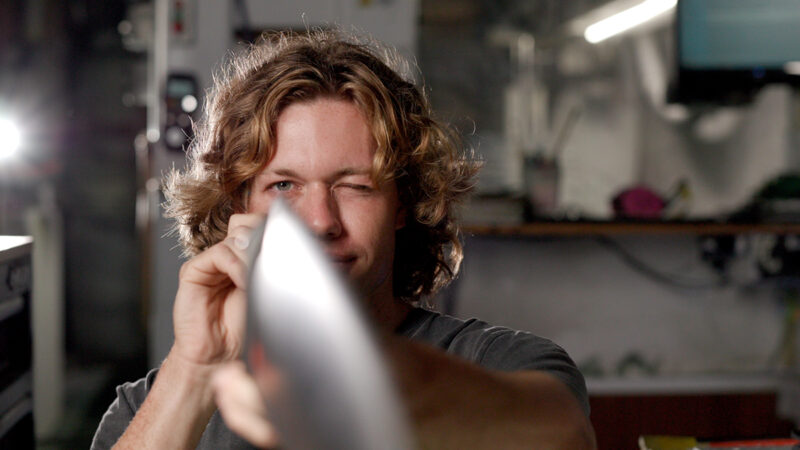
The unique shape of the Apex mast is the result of treating the mast with the same focus and importance we are used to seeing with wings. The top, middle, and bottom of the mast work under very different operating conditions and change depending on riding style and discipline. The baseplate also had a significant impact on takeoff/touchdown drag and weight distribution. In the design process of the Apex I really dove deep into better understanding of the operating conditions and using that knowledge to fine tune every design parameter for its specific goal. For me and the team, once we tried it there was no going back.
What were the key priorities on each size in the mast range, and how do they each feel different on the water?
The 77cm is built for the highest straight-line speed and a fast rail to rail response. It excels downwind, surfing, and pumping. The 85cm and 95cm are tuned for control and stability when leaned over and at higher speeds. The 85cm is slightly thicker and stiffer offering better control through turns and more versatility than the 95cm, which is meant for powered up towing or sailing requiring maximum control at speed with smaller foils.
You’ve had some big results on the Solus, such as the Paddle Imua, Maui to Molokai, and the Koa Kai Triple Crown, even against smaller wings. Other than the riders themselves, what do you think is driving that from under the hood?
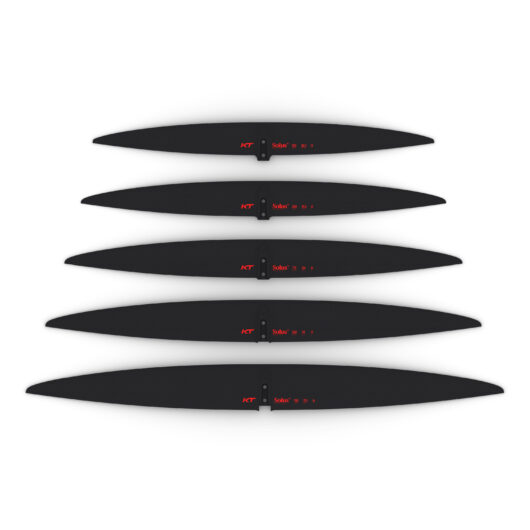
The original idea of the Solus concept was to create a high aspect foil that was as stable and maneuverable as possible by utilizing a reflex airfoil to enable use of a much smaller stabilizer. It turned out the reduction in load on the stabilizer massively improved the speed and efficiency of the whole setup. The reflex airfoil allows a much longer chord length for the same efficiency, improving the structure of the wing and effectively “hiding” a much higher aspect ratio wing inside. Even though I would consider the 14AR far from extreme, the performance is comparable to a more standard design with less area at 17-18AR, just with more physical structure.
The Halo seems like it’s happy in several disciplines. What was the original brief for this wing, and did it end up being a lot more than you originally expected?
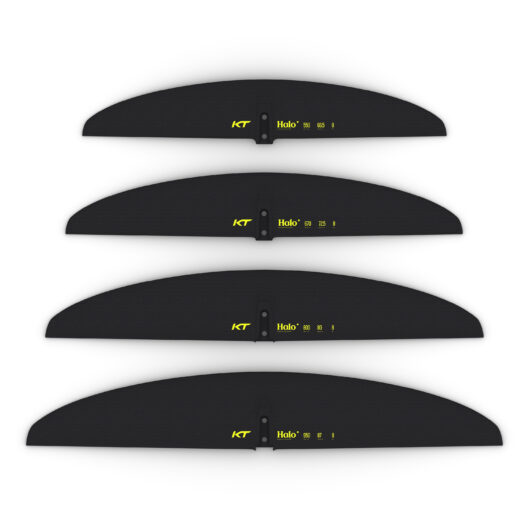
The Halo range was fully inspired by our team riders. It began with our freestyle rider Nathan Berger looking for maximum repop to land consecutive maneuvers. This was a new design challenge for me and led down a new path that resulted in a foil that is stable, smooth, and fast. Through a few iterations and feedback from Hawai’i-based Kai Lenny and Otis Buckingham, the Halo’s envelope grew to excel in the waves and became far more intuitive and forgiving. When I make a more focused design, hitting the main goal is the easy part. Most of the effort goes to maximizing versatility without compromising the purity of the main vision.
The Atom surf tail leans much more toward maneuverability. Were you prioritizing that in the design with this one?
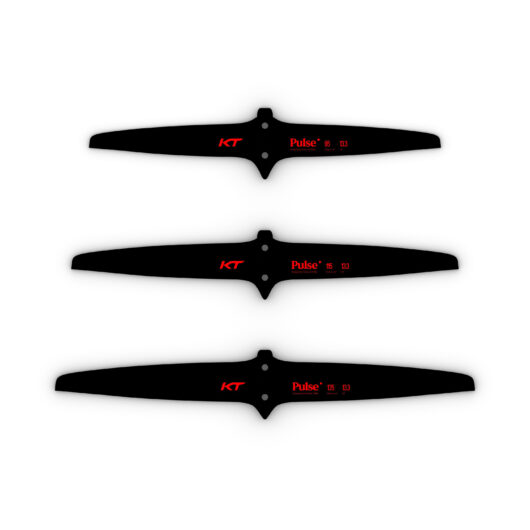
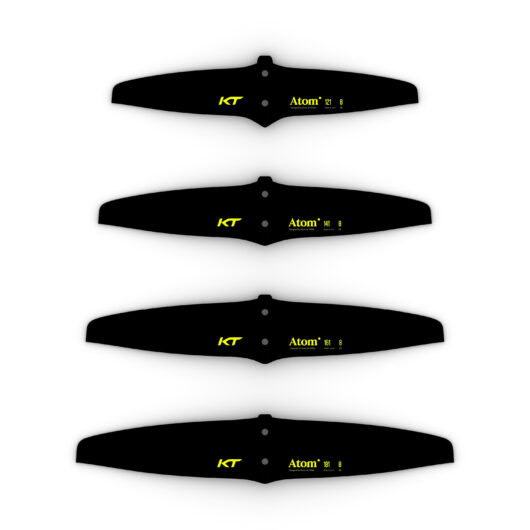
The Atom rear wing combines the goals of the original Solus concept and the Halo range. Everyone (including myself) were asking about a smaller stabilizer and I wanted to create something small but very controllable. I played a ton with the outline, front profile, and airfoil along with the development of the Pulse rear wings until we hit a point everyone was really stoked on. The Atom is faster, stiffer, and feels more connected than the Nomad rear wings and is a great complement to all front wings in our range.
How much of your design process happens on the computer versus on the water? And is there a point where you’ll trust one over the other?
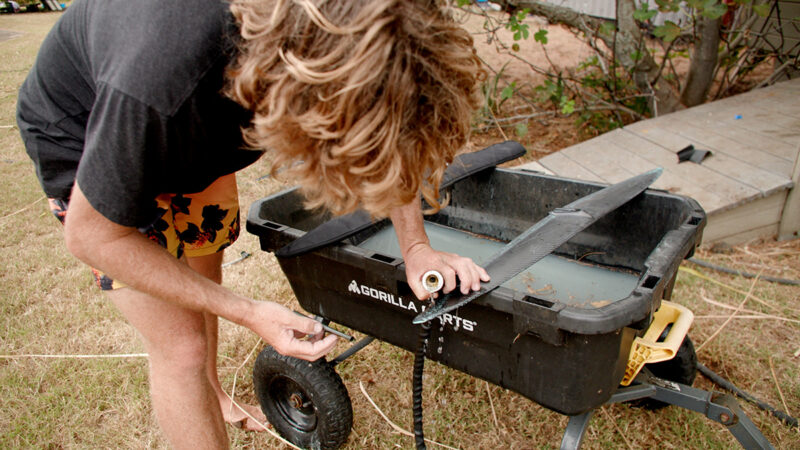
I spend a ton of time validating computer results; I want to know exactly how what I’m feeling on the water translates to simulation results and I spend most of my design time on computer optimization.
There have definitely been times where virtual and real-world results are completely different and it is always a huge opportunity to learn the importance of a factor I never gave enough consideration! I think the Solus is the perfect example of that. No matter what the final call is always under my feet.
And looking ahead Kane, has the performance of this range already helped inform whatever is coming up next?
In chasing a complete understanding of how a foil works, edge cases need to be investigated. Team riders push gear to the absolute limit and are a great opportunity to understand function in new ways that lead to breakthroughs in understanding. At the same time, feedback from regular riders is just as important in bringing fresh perspectives into the process. Learning never follows a linear path and instead, weaves, splits, and meanders as our understanding improves.
The progress never stops and I couldn’t be more excited for the future. Recently we have expanded our prototyping capability and the team; The new inspiration and opportunity feels like we have taken off the restrictor plates and pushed the throttle to the floor. I’m excited to bring concepts that have been marinating in the background to life and to everyone riding KT foils.