Inbound: VAYU PYRO
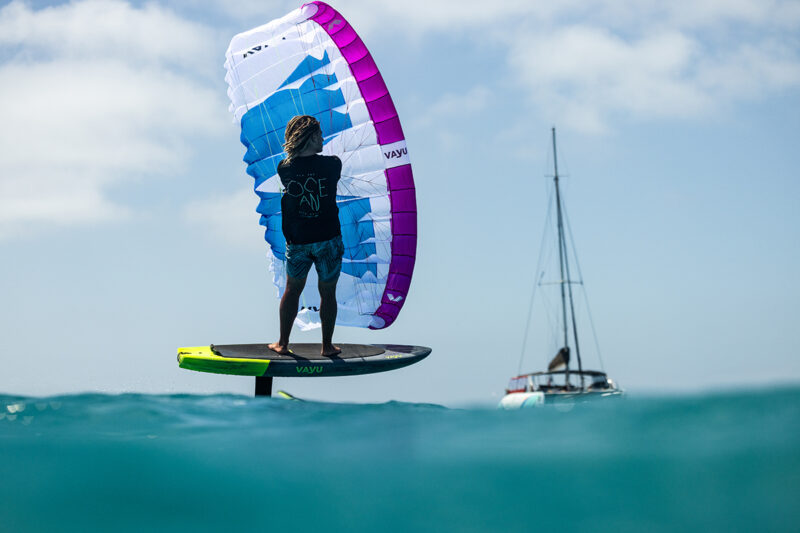
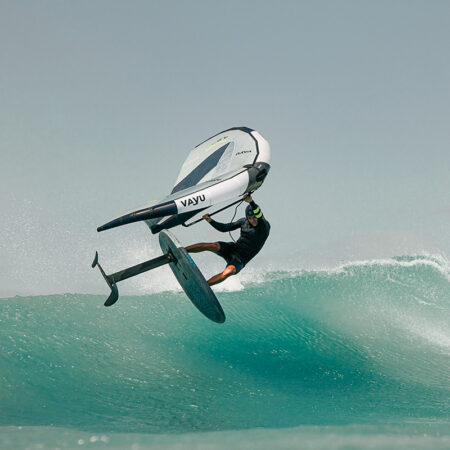
Landing recently from VAYU is their new PYRO parawing, and who better to get the full skinny from than our old friend Brandon Scheid, VAYU team test rider, and deeply embedded in the product development…
First up Brandon, give us a little overview of the PYRO, and why are the parawing crowd gonna love it?
The PYRO is VAYU’s first go at making a modern parawing. We wanted something that is extremely stable, intuitive, easy to drive upwind, and straightforward to pack down. Additionally, we wanted to make no compromises on build quality and use top spec material in its construction. I think the users will love how easy it is to control and the great positive bar feel on the hands, while still being simple and robust.
It’s been in development for over a year – what were the biggest breakthroughs during the R&D process?
We had a long runway and lot of time to make samples, so we were able to learn what not to do, which is really important when making new things. Finding the right balance of outline and profile was very tricky, and once we found the right combination it just started working like magic. Stability is one of the most important characteristics, so we spent a lot of time working on making it rock solid no matter the angle of attack. The final piece of the puzzle was actually using pretty stiff rods in the LE ribs. This drastically helps hold the shape of the LE, keeps maximum upwind performance, and actually still stows pretty well.
This is a Bill Hansen creation but we understand you had a big hand in its development too, correct?
I’ve had the great privilege to work with Bill on and off since my days at Liquid Force Kites. He is a wealth of knowledge and such a machine when it comes to the computer side of design. Whereas I am a machine for testing and time on the water proving the performance. So I put my heart and soul into making sure we had something we could be really proud of. Not only that, when you live in Hood River, you have one of the best testing grounds for making really bomber products.
The PYRO was built with an aim of achieving maximum control with minimum clutter. In practice, how have you achieved that?
Getting good steering control and response is one of the hardest things with these structures. When you’re driving upwind and riding with a lot of power you tend to depower/ride them at low angle of attack. This tends to make them unstable and unresponsive, so getting the right balance of power delivery and response is really tricky. By using the “bride” bar setup we were able to better control the shape of the canopy over a wider range of sheeting/AoA. This allows us to get response even when sheeted out.
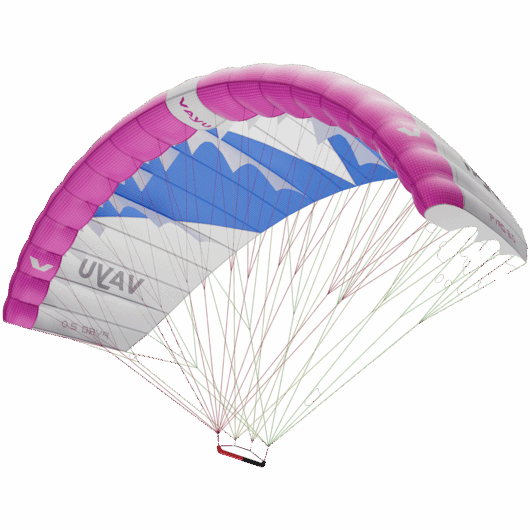
The canopy runs a moderate aspect ratio, tuned for real upwind ability. How did you balance power and efficiency without sacrificing calm, predictable control?
By using a short, easy-to-stow bridle configuration we were able to find a good balance of controllability and power. We wanted something that had a really solid feel on the hands with predictable power delivery. By balancing the shorter bridle set, with a clean powerful profile we were able to keep the power while simultaneously keeping the wing quite responsive. It is a pleasure to fly, sometimes I don’t even like to stow it, it’s just too fun to fly.
Let’s talk about the Bridge Bar. What are the differences here to the traditional bars, and what does that sequential load through the “bridge” give the rider?
Firstly coming from kiteboarding I wanted a clean, no hassle bar, and while trying to achieve that goal we also found that the “bridge” line gave us better control of the canopy shape while changing the angle of attack. So by trying to get one thing, we actually got two amazing features/feels. Great depower and stability, while keeping the bar clean and as flutter free as possible.
You’ve made everything modular and replaceable. Was this a response to how hard riders are pushing parawings now?
It sure seems that the parawingers are tinkerers. They are not intimidated by taking bridles apart, modifying, and finding ways to make the parawing better work for them. So we wanted to make our setup easily modifiable. For instance, moving the knots on the Bridge line can change how the power engages, how the bar feels, and the depower range. While I won’t encourage people to change it much, as we worked hard to find the best balance, it is possible and some riders might find in light wind they like it setup a particular way.
Parawinging is evolving fast. Where do you see the category heading next, and how much of that future is already baked into the PYRO?
With parawing it seems every few months there is a new feature or setup coming out. I bet soon we will see “hybrid” wings, double surface, and who knows what else will be dreamed up. However, we wanted to make the PYRO achieve our core goals. Number one stability, a good wing should never “tuck”, it should be responsive and intuitive to fly. It should have a short enough bridle to stow easily at arm’s length. It should rip upwind while being able to depower. We wanted to make something you could ride laps, not shuttle upwind.Finally, it should be made of light, packable, quality materials.