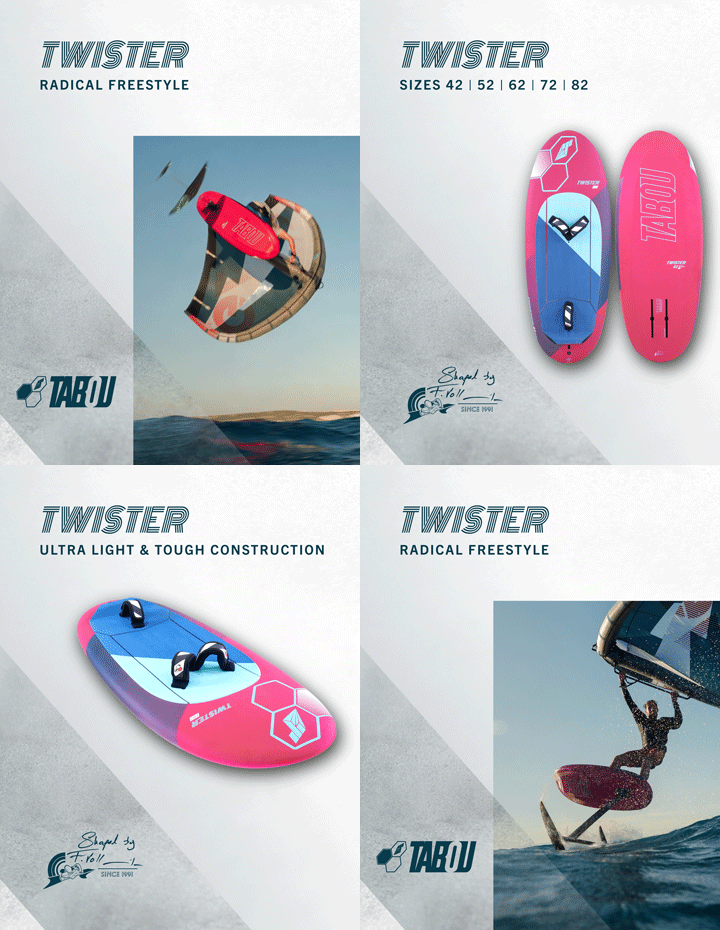
INBOUND – TABOU TWISTER
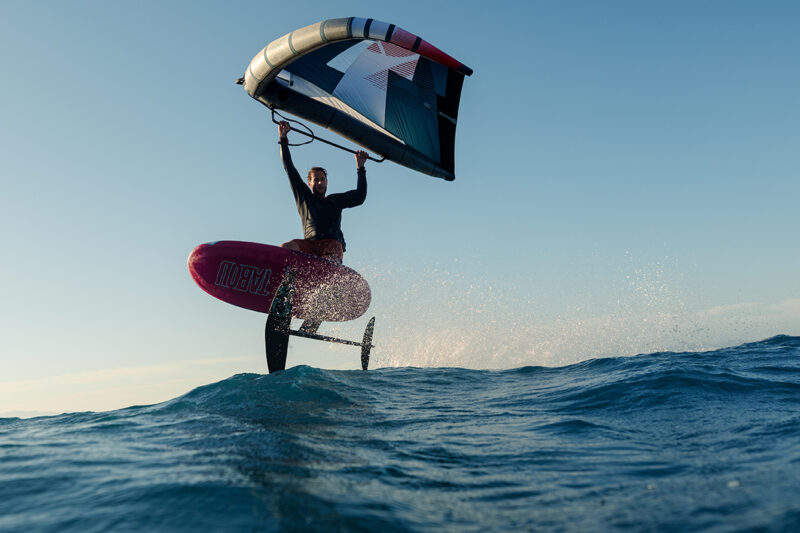
Tabou’s new freestyle board might be built tough, but it sure is ready to show you a good time. We hit up the Tabou team for more details…
Well, this immediately sings “fun” to us. Tell us all about the Twister…
Absolutely, the Twister is all about triggering pure fun and excitement when riding creatively. It’s our dedicated freestyle board, designed to make every move in the air feel natural and every landing forgiving. We wanted a board that reacts instantly, with a shape that helps riders go bigger, spin faster, and still maintain control when they touch down. The Twister is playful and neutral at the same time, easy to get airborne, balanced in the air, and ready to carve once you’re back on the wave. In the end it proves to be much more than a freestyle board, it’s suited for everybody who enjoys a compact shape.
It's designed to balance aerial freestyle performance with surf responsiveness. What was the main inspiration behind blending those two worlds into the one board?
The goal was to create a board that doesn’t force you to choose between freestyle tricks and surf-style riding. Riders today want to mix it up, jumping one minute and carving the next. The Twister’s shape evolved from watching riders seamlessly transition between those styles. We focused on creating neutrality in the board’s behavior, that means it doesn’t “fight” you in the air or on the wave. Whether you’re spinning through a trick or surfing a clean face, it stays predictable, reactive, and light under your feet.
For someone moving up from a beginner or intermediate freestyle board, what differences will they notice first when riding the Twister?
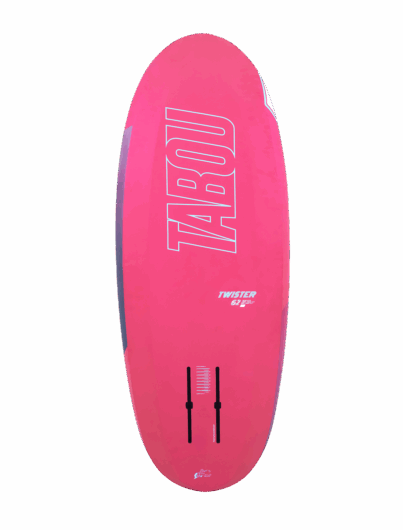
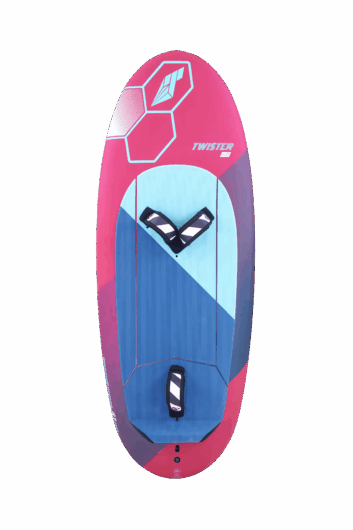
The first thing they’ll feel is how compact and direct it is, but despite its compact appearance takeoffs are super easy and controlled. The constant-curve rocker gives a smoother, more efficient takeoff, and the board feels alive the moment you pump or pop. The recessed deck brings your feet closer to the foil, giving a very connected feeling and much more control. There’s also extra volume in the nose, that’s something riders really appreciate because it helps recover from nose dives or sketchy landings. It’s a confidence booster for progressing riders.
How does the Twister’s design help riders in pushing personal limits and attempting more advanced moves?
Every detail in the Twister’s shape was chosen to help you land more tricks and recover faster. The compact outline with very parallel rails maximizes surface area across the board, which means when you touch down after a move, it pops back up quickly instead of sticking. The tri-panel bottom gives a super-efficient water release, so takeoffs feel smooth and predictable, while you also get stability and control. It’s a board that forgives mistakes, but still rewards precision, which makes it accessible to many riders, but it also offers the potential to really push the limits.
Can you explain how the compact, parallel outline helps with both pop for tricks and recovery after landings?
That outline gives you two big advantages. First, the parallel rails create evenly distributed volume and lift across the board, which helps you generate pop with less effort, the board accelerates smoothly into the air. Then, when you come down, the same shape distributes impact more evenly. Combined with the nose volume and rocker line, it stops the board from catching or sinking. So, you can land flat or even slightly nose-first and still recover instantly. It’s a design that keeps the flow going, even when you’re trying new things.
Construction is always key in boards that take a beating from freestyle. How did you balance lightweight performance with the stiffness and durability factors?
That’s one of the biggest challenges in freestyle board design. We’re using a smart mix of different materials – lightweight sandwich construction with reinforced stress areas – to keep the weight low without compromising strength. The board has to be stiff enough for precise energy transfer, especially during pop and takeoff, but also durable enough to handle repeated impacts. It’s a fine balance, but the feedback from riders has been great in terms of both feel and longevity.
Yeah tell us more about that feedback from riders, and who’s been key in the R&D of this board?
The R&D process for the Twister was very collaborative. Our in-house design team spent countless hours testing different shapes, outlines, and volumes to find the ideal balance between freestyle and wave performance. We worked closely with riders of different levels to make sure the board performs across a wide range of conditions and styles. The overall feedback has been extremely positive, riders love the board’s neutral and forgiving feel, its smooth takeoff, and how quickly it recovers after landings. That’s the best sign that we’ve created something that really works in the real world.