Inbound: LEVITAZ FREE SERIES
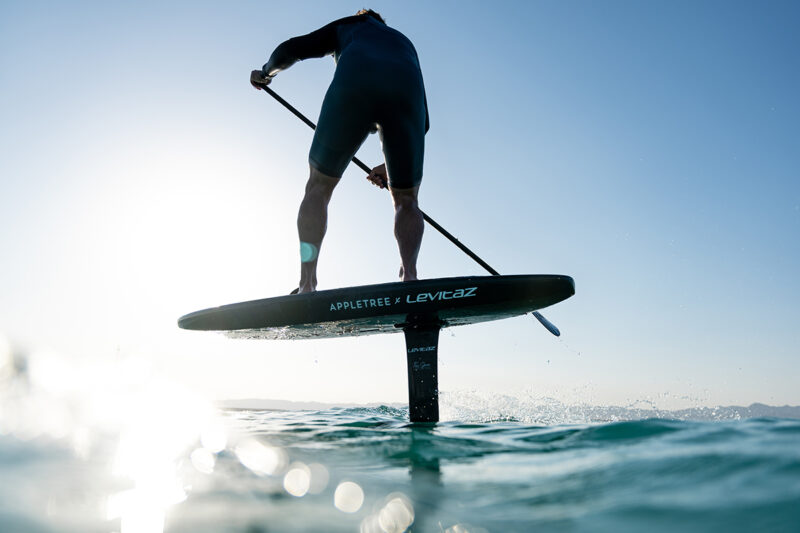
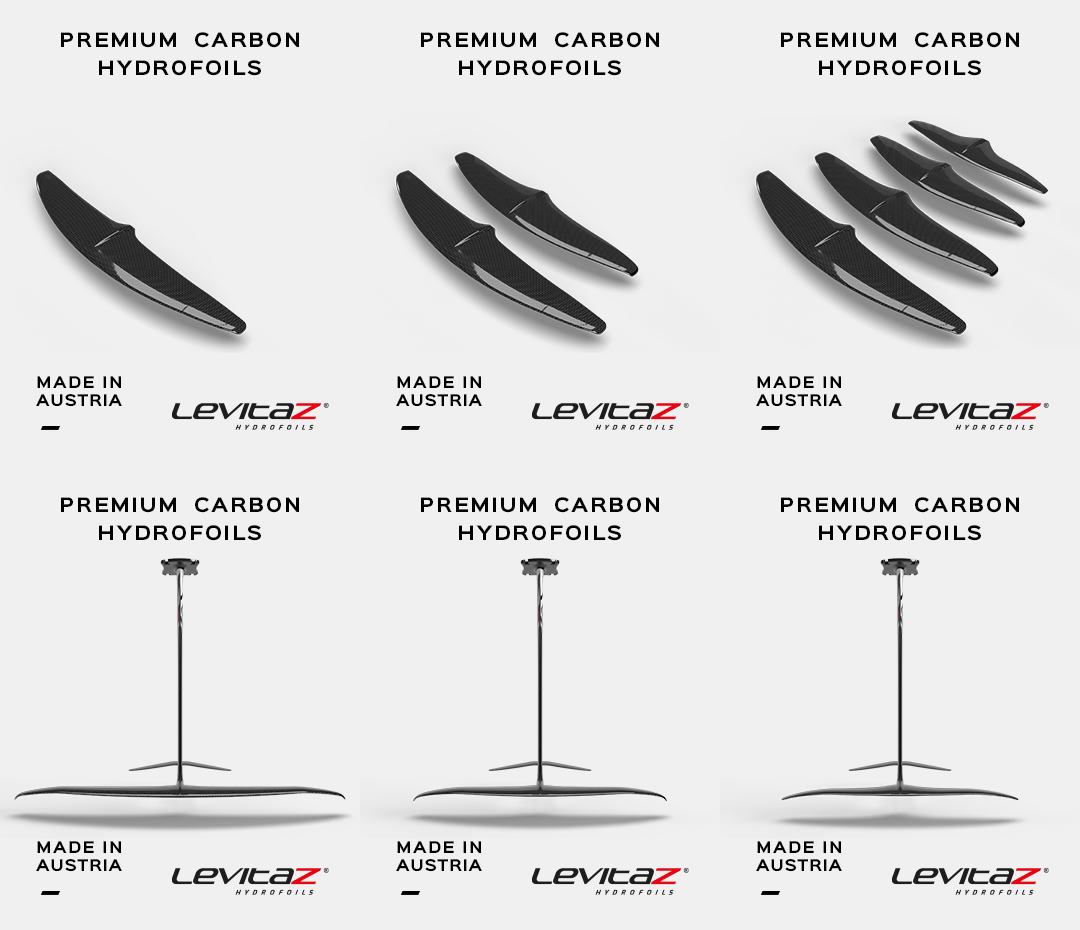
Known for their high-end race capabilities, Levitaz have taken some of that secret sauce and infused it into their new Free Series foil range. We got in touch with Michael Zeilinger, Levitaz’s Head of Brand, to find out all about it.
What was the original idea behind the Free Series, and where did you see it fitting within the wider Levitaz foil lineup?
The original idea was simple: take the precision and “locked-in” feel we’re known for in racing, and re-package it for everyday riding – without overkill. We wanted a freeride platform that lifts early, stays calm, carves clean, and keeps gliding, while keeping ownership simple.
In the lineup, the Free Series is our go-to high-performance freeride platform. It carries over what we’ve refined in racing most: an extremely stiff, precise connection between components. That’s what makes the foil feel direct and stable – while the tuning is aimed at real-world freeride across a broad range of disciplines. Durability is a big part of that promise. The interface is built around a high-strength titanium connection, and the titanium box is virtually indestructible in normal use.
And it follows a core Levitaz principle: future-proof modularity. Our previous freeride interface stayed compatible for around a decade, and the Free Series is designed as the platform we’ll build on for the next decade as well.
Who have been the key players in terms of design and R&D feedback?
This project was driven by a deliberate “race-to-free” transfer inside Levitaz. Our engineering and R&D team took the structural principles we trust in racing – stiffness, tight tolerance control, and durability – and validated them for a freeride life cycle, supported by the engineering depth of our parent company, Geislinger.
On the design side, the wing shapes build on the experience of Mario Legenstein, our foil designer from the very beginning of the brand, translating the Levitaz feel into freeride with glide, control, and predictable turning. On the feedback side, we leaned heavily on field testing across different spots and rider profiles, tracking what riders actually feel: take-off thresholds, top-end control, calmness, maneuver consistency, and glide.
The Free Series is designed to work across winging, downwind, pump, kite, and foil assist. Was that level of versatility intentional from the outset?
Yes – very intentionally. The goal was one platform that matches how people actually foil today, switching disciplines depending on the day and conditions. That’s why we focused on a unified setup feel: the handling stays familiar as you change your session. You tune with mast length and front wing choice, while the core feel remains consistent.
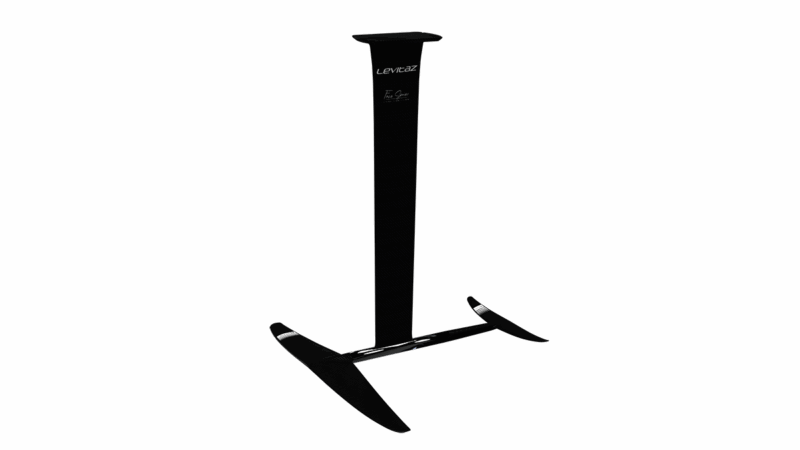
The Free Series masts are length-specific in their design and layup. What differences would a rider actually feel when switching between the 76, 84, and 96 mast?
You feel the difference immediately, because each mast is designed specifically for its length rather than being the same profile cut shorter. Every size has its own taper, thickness profile, and layup, giving it a distinct purpose and on-water feel. The 76cm mast is the stiffest and most direct, delivering a compact, reactive ride that suits pumping, wave riding, shallow water, and tighter turns — particularly with larger, high-lift wings where stiffness outweighs drag gains. The 84 cm sits in the middle as the true all-rounder, striking a pragmatic balance between clearance, control, stiffness, and drag across most disciplines. At the longer end, the 96cm is tuned for higher speeds and rougher conditions, where loads increase quickly and ventilation becomes more critical, prioritising stability, confidence, and headroom over chasing minimum drag. Across all three, the low-drag, race-inspired profile and high stiffness preserve the unmistakable Levitaz speed feel.
Reduced maintenance is flagged as a benefit with the Free Series. How does the system design help achieve that?
We attacked maintenance at the source: interfaces, threads, and repeatable assembly. The heart of the system is a CNC-machined titanium fuselage core made to ultra-tight tolerances, giving a precise, consistent fit that stays tight over time. Material choices focus on long-term durability in the highest-load areas.
Practically, that means titanium interfaces and threads designed to resist wear over many assembly cycles, and one tool for the whole system – including board mounting – which makes travel and daily use noticeably simpler.
Is there a particular Free Series front wing that surprised you during development or testing in terms of its range or versatility?
We didn’t aim for big surprises. What we did see was a clear favorite in terms of range: the Free Series 900. It’s the most well-rounded wing in the lineup: early take-off, strong glide, solid top-end, and a stable, tolerant feel in chop or when powered. At the same time it stays playful and easy to pump – great for light-wind winging, parawinging, and surf-style foiling, and for riders progressing downwind.
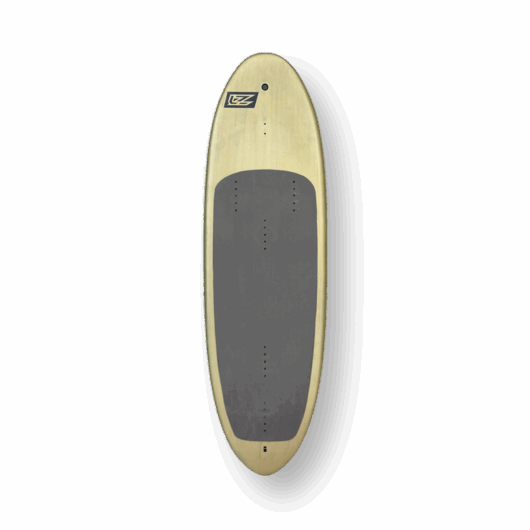
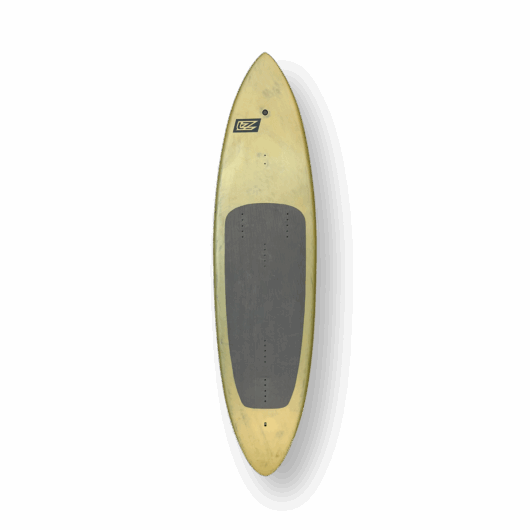
Alongside the Free Series foils, you’ve introduced the BOOM Free Series boards. Why was it important to develop the boards and foils as part of the same ecosystem?
The Free Series fits any board with US tracks, so compatibility isn’t the issue. We went further because the best experience comes from a balanced system.
BOOM Free Series adds a major benefit through our hollow SSC construction: extremely light yet stiff, which improves acceleration, connection to the foil, and efficiency. Combined with the mid-length outline, it delivers glide and earlier lift-off – more time flying, less time working. And if the board gets you up earlier, you can often ride smaller foils sooner, unlocking more speed and range.
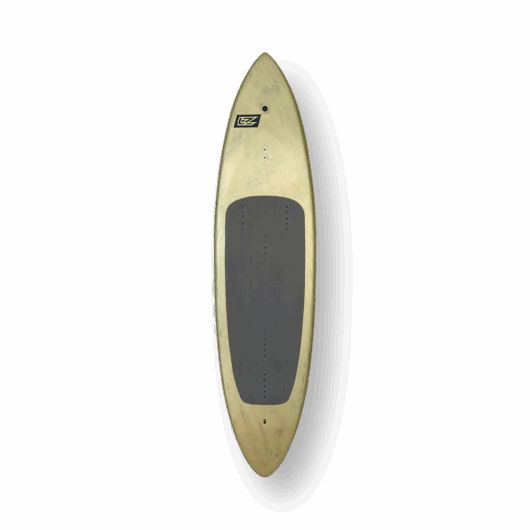
With the mid-length shapes sitting between classic wing boards and downwind boards, who do you see the BOOM Free Series boards working best for, and in what conditions do they really come alive?
They’re for riders who wing, parawing, or paddle and want one board that covers most days – popping up early, releasing cleanly, and staying calm at speed. They shine in light wind and weak days thanks to efficient displacement acceleration and smooth take-off, and in chop and touchdown-heavy sessions because they regain speed quickly after touchdowns.
The range stays clear: BOOM FS 95 for maximum early take-off and comfort, BOOM FS 83 as the all-round sweet spot, and BOOM FS 63 as the sporty, direct option for skilled riders when it’s windy.