Inbound: GA Foils UHM Team Foil & Move Wings
The team over at GA Foils have been a busy bunch since we last spoke, and a key recent release was their full Team Foil setup and their new mid-high aspect Move front wings. César Portas, R&D at GA Foils, Wings & Boards was our go-to to get the details.
The UHM Team Foil builds on your UHM Carbon mast, but introduces a totally new fuselage and connection. What triggered you to go for the full redesign here?
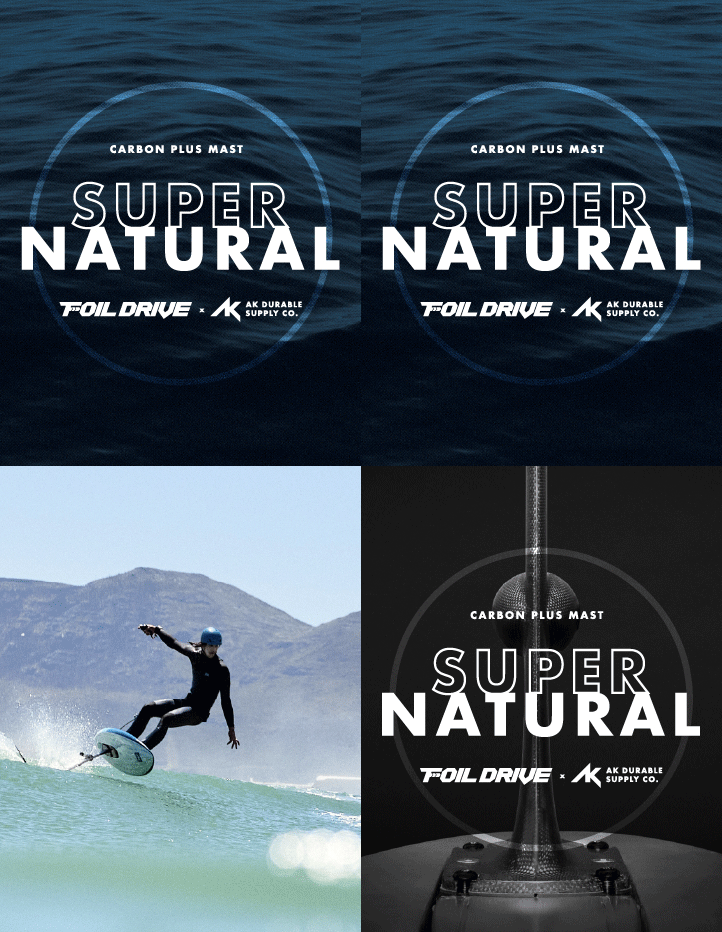
With a carbon mast, the connection design is no longer as constrained as it is with aluminum. Carbon allows you to shape the interface in a way that is both safer and far more efficient in terms of load transfer and rigidity. Once the UHM Carbon mast was finalized, it became clear that the existing fuselage was holding the system back. Redesigning it wasn’t about change for the sake of change, but about allowing the mast to perform at its true level. The new fuselage also allowed us to bring all previous front and rear wing designs into this new platform, giving them a noticeable gain in precision and overall feel.
The mast profile comes in at a very svelte 15mm. How do you make sure this doesn’t compromise strength or feel?
At 15mm, the key isn’t just the thickness, but how the mast is built. We use very high-modulus carbon fiber, which allows us to maintain stiffness and responsiveness at this slim profile. A lot of work also went into the mast profile and fiber orientation, particularly to control torsional stiffness and flex behavior. One of the key sensations on the water is the fast flex recovery that carbon allows – the mast loads smoothly and releases energy very quickly, giving a direct and reactive feel. The goal wasn’t to make it feel harsh, but to keep the feedback clean and predictable when riding at speed or under heavy load.
What were the main gains you were chasing with the new integrated fuselage?
The integrated fuselage of the MOVE system was designed to eliminate the compromises of traditional bolted connections. Screws and interfaces inevitably introduce tolerances, micro-movement and localized stress points, all of which reduce precision and add drag.
By integrating the fuselage directly into the system, we gain a much stiffer and more continuous structure. Loads are distributed more evenly, and the water flow around the mast and fuselage junction is significantly cleaner. On the water, this translates into a more solid, direct feel, with improved control and confidence, especially when riding at speed or under high load.
Was this foil developed with a particular discipline in mind first? Or did you test across wing, surf and freestyle from the outset?
The foil was tested across wing, surf and freestyle from the very beginning, with the goal of creating a truly versatile freeride platform. In the larger sizes, the focus was on accessibility and progression. They are very friendly, with smooth takeoffs and an incredible amount of usable lift, making it easy to build confidence and progress quickly.
At the other end of the range, the smaller sizes become much more dynamic. They are fast, agile and very surf-oriented, with enough lift and pop to also work extremely well for freestyle and jumping.
Across the entire range, the design focus was on achieving the right balance between glide, lift and pumping, so the foil feels efficient, playful and easy to manage in real conditions.
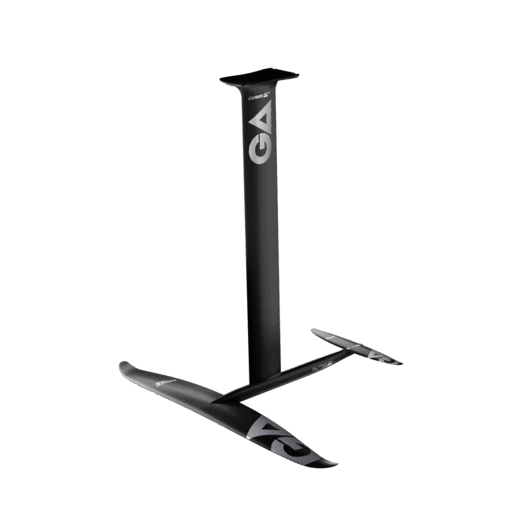
The MOVE wings are positioned as a new generation of lift and efficiency. Was there a specific area you were you most focused on when you started designing them?
From the very beginning, the focus was very clear. Together with Head Designer Urs Hungerbühler, we kept coming back to three key points throughout the design process: easy takeoff, a friendly and accessible feel, and real efficiency. Urs has an exceptional ability to translate rider feedback into very precise design refinements, and that iterative process played a big role in how balanced the final wings feel. Every design decision was checked against those core goals.
Efficiency seems central to the Move concept. Where do you feel this shows up most on the water?
Efficiency shows up most in how little effort the wing requires to keep moving. You can link sections more easily, pump for longer with less fatigue, and maintain speed through turns without constantly correcting. It’s not just about glide or top speed, but about how naturally the wing carries momentum and stays smooth across a wide range of conditions.
Finally, for someone stepping onto the UHM Team Foil with MOVE wings for the first time, what’s that gonna feel like, and what do you think will surprise them most?
The first thing most riders notice is the instant takeoff. It feels very intuitive and friendly from the first meters, which builds confidence immediately. What usually surprises people most is how efficient it feels once flying. The foil carries speed effortlessly and stays smooth, allowing you to focus on riding rather than managing the setup.