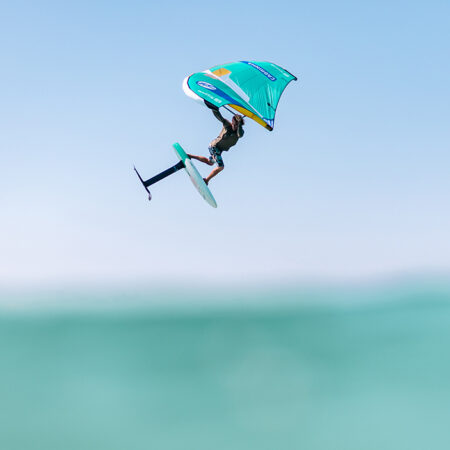
Inbound: Eleveight WFS V7
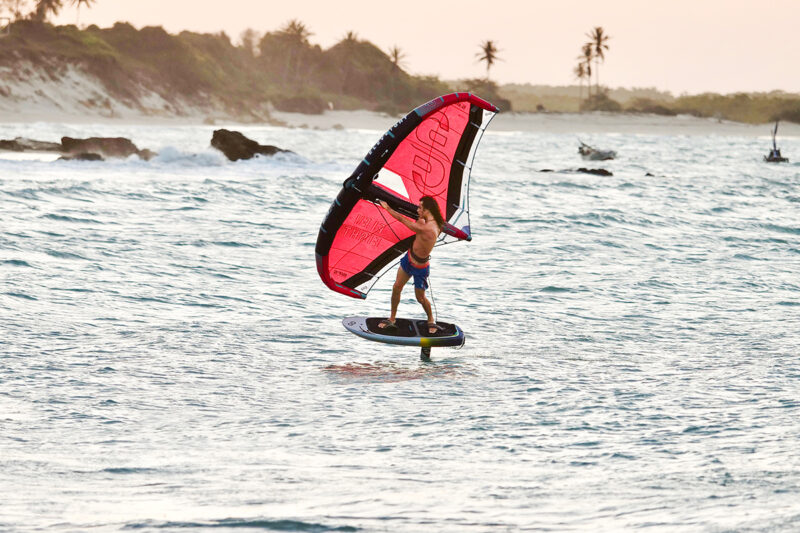
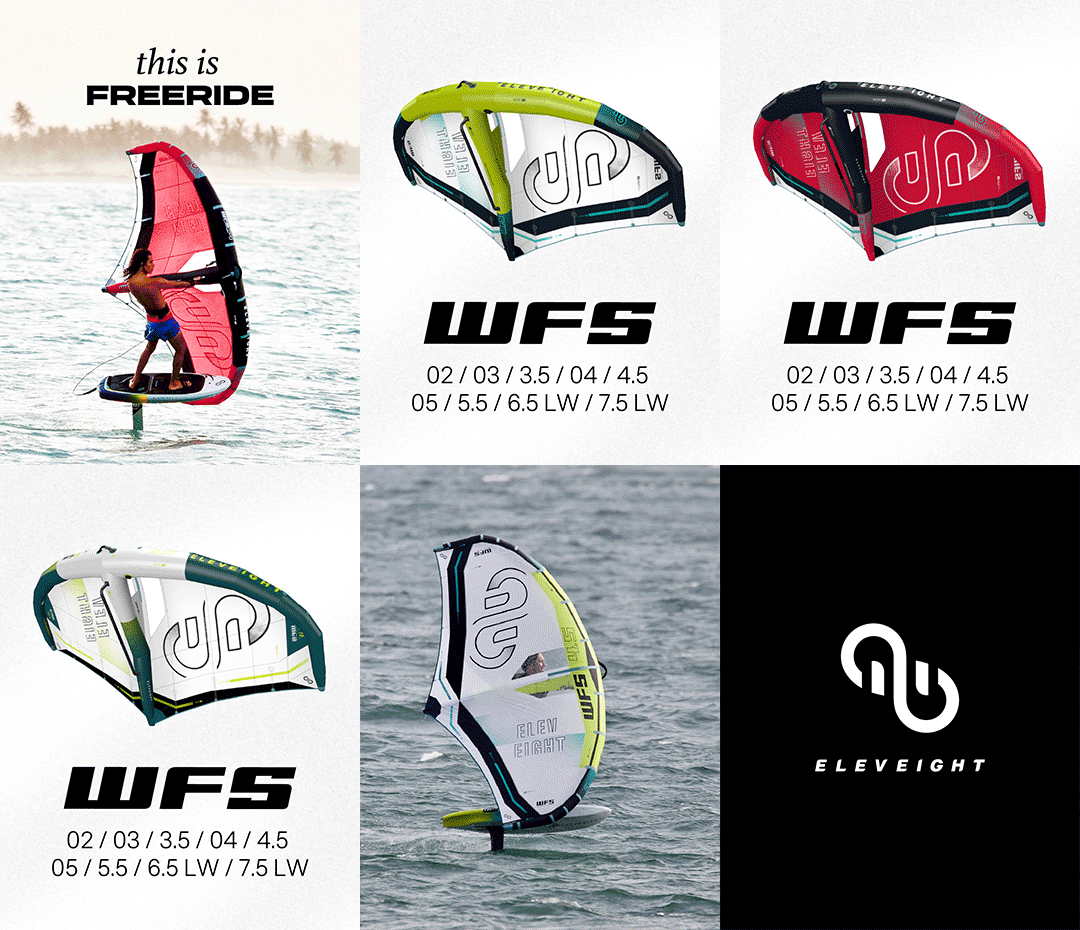
It’s hard to believe we’re already at the seventh evolution of Eleveight’s popular freeride wing, the WFS – but here we are. As ever, it embraces the latest materials and refined design updates, without losing its fun, all-rounder character. We hit up the team for the full download.
The WFS has always been positioned as a true crossover freeride wing. With V7, what was the main goal you set out to achieve?
With the V7, the goal wasn’t to change the character of the wing, but to really fine-tune it. The WFS is a true crossover freeride wing, and that means it needs to handle everything: flat water, waves, light wind, stronger conditions, cruising, or pushing a bit harder. Our main objective was to sharpen that all-round ability so riders can confidently tackle any condition or style without thinking twice about their equipment.
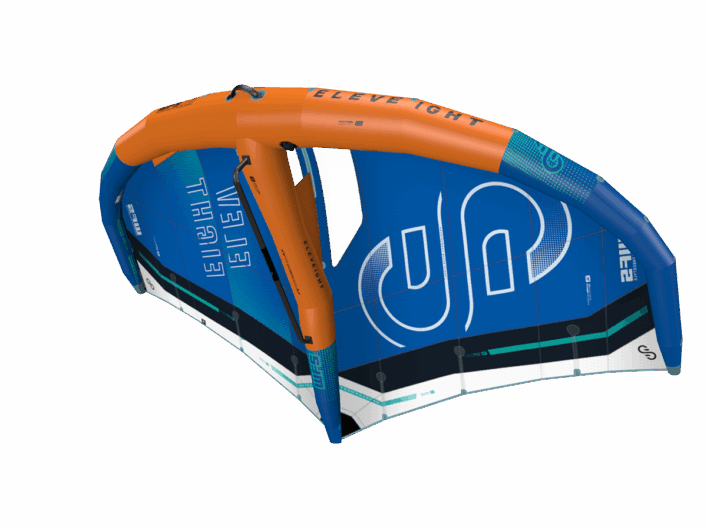
To achieve this, we worked on the free-fly balance by slightly deepening the central section of the canopy. At the same time, our rider network asked for better downwind visibility. Wing spots are getting more crowded, so we enlarged the window panels to improve awareness and safety.
Lightwind performance was another big focus. We introduced new sizes, including 6.5m and 7.5m, specifically designed for lighter conditions. They use a different inflatable material, XT Light, which gives more stiffness while reducing overall weight. The result is better efficiency, easier starts, and simply more days on the water.
Riders often talk about the “feel” of a wing when initially asked about it. How would you describe the overall feel of the WFS V7 compared to the V6?
Both the V6 and V7 are very balanced wings with intuitive hand positioning and predictable power development, and that core feeling hasn’t changed.
The V7, however, feels a bit more direct. Thanks to increased canopy tension in the central area, there’s a clearer connection between your input and the wing’s response. You’ll also notice improved free-fly balance and a slightly increased wind range, making the wing feel even more versatile.
You’ve put a lot of emphasis on reducing drag and improving aerodynamics. How noticeable is this for riders across different conditions and disciplines?
Aerodynamics are crucial in wing design. They create that balanced feeling where the wing feels light in your hands but still reactive and powerful when needed.
The first thing riders usually notice is the drift. When you’re on a downwinder or riding waves, good free-fly balance makes a huge difference. You don’t have to think about the wing as much; it naturally drifts behind you and lets you focus on the ride instead of constantly adjusting your position.
That same aerodynamic efficiency shows when the wing is powered. With an intuitive angle of attack, the WFS V7 feels light and reactive, with instant power development and stable pressure points. You feel it when going upwind and especially during the first pumps. For freeriders in particular, it creates a wing that feels predictable, confidence-inspiring, and easy to control across a wide range of conditions.
The new full carbon CS Wing Bar is one of the big updates for V7. What improvements does it bring in terms of control and comfort?
The new carbon CS Wing Bar works hand in hand with our updated strut shape. Together, they form the backbone of control on the WFS V7.
The CS bar is very light, which reduces overall wing weight and improves handling straight away. Its slim diameter gives an ergonomic hand position, so control feels natural and precise. That also means less fatigue. Your hands and forearms don’t tire as quickly, which translates into longer, more enjoyable sessions. We also refined the EVA grip to ensure reliable traction in all conditions.
Materials play a big role in this wing’s character. Can you talk us through the fabrics and how they contribute to the wing’s stiffness and durability?
For the WFS V7, we use our updated XT 2.0 material for the inflatable structure. It provides the right level of rigidity to create a stable frame while keeping a good balance between performance and price.
The main canopy uses our proven X4 ripstop with a 4 x 4 yarn layout, offering low elongation and excellent resistance to elastic fatigue. To optimise canopy tension and load transfer, we use X6 ripstop on the trailing edge and as a secondary canopy material. Both materials are highly tear-resistant and help reduce flutter, resulting in a cleaner, more controlled feel over time.
The WFS V7 is described as suitable for all levels. What type of rider do you think will benefit the most from this wing, and why?
The WFS is a classic freeride wing that truly covers all disciplines. It’s ideal for riders who want one wing that works reliably in all conditions without having to specialise.
Its intuitive handling and forgiving nature make it a great choice for beginners, while more advanced riders will appreciate the direct control and versatility. It’s equally at home cruising, riding waves, or adding freestyle elements. In short, it adapts to the rider, not the other way around.
Finally, if a rider steps off another freeride wing and onto the WFS V7 for the first time, what’s the first thing you expect them to notice?
The overall build quality is usually the first thing people comment on. You can see it in the canopy materials, reinforcements, and clean construction.
The second thing is the weight. The WFS is relatively light compared to many other freeride wings, and that’s immediately noticeable on the water.
Most importantly, riders feel how easy and balanced the wing is. The refined aerodynamics and clean canopy tension make the WFS V7 feel dynamic, intuitive, and performance-driven from the very first ride.s.