INBOUND: AFS STREAM ONE
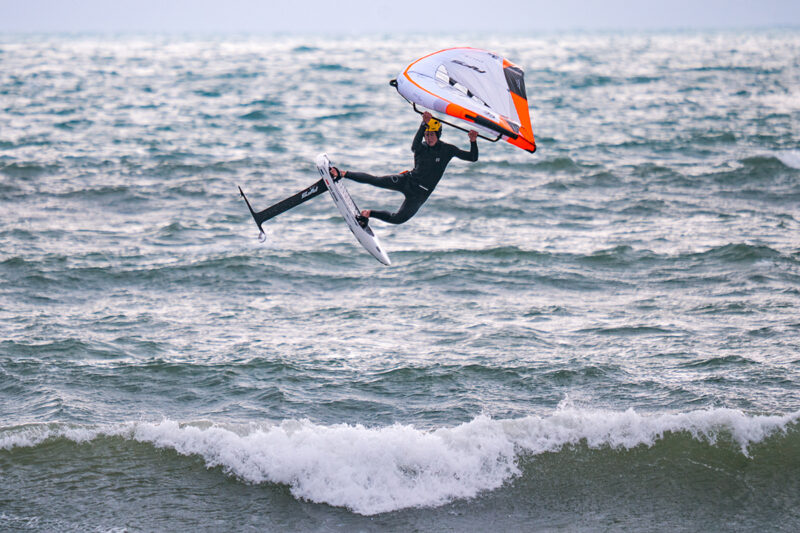
The original Stream has a well-deserved reputation as a wing with serious performance credentials in freeride and wave. Now AFS has introduced the Stream One – a more forgiving, more accessible take of the original. We caught up with the team to find out where the Stream One fits into the range.
The original Stream is your light, intuitive wing built for freeride, freefly, and wave-riding. Tell us what the new Stream One brings to the party now…
The Stream One is built around one idea: more riders, more sessions. Same shape philosophy as the Stream, same feel in the hands, but tuned to be more forgiving and more accessible in price. We didn't cut corners to get there, we made deliberate engineering choices to bring that quality of ride to a wider range of people. It's a serious wing, built with intent.
The Stream One carries over the DNA of the original Stream. Which key characteristics did you retain and what’s different?
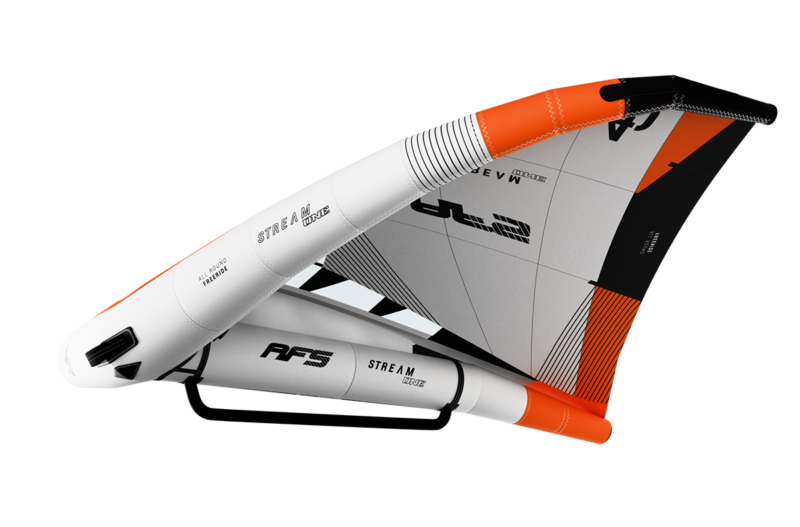
The overall shape, the window layout, the removable boom system, the canopy fabric: all of it carries over. That's your guarantee that the maneuverability, the freefly stability, and that light feel in the hands are all there. What we adjusted is the angle of incidence of the canopy, shifting the draft point rearward gives the wing a calmer, more forgiving character. It gets you on foil earlier and rewards a wider range of riding styles.
Let’s talk materials. The big shift is moving from UPE on the Stream to Dacron on the Stream One. What difference has that made in terms of durability and overall feel?
Dacron is what makes the price point possible, but it was an engineered decision, not a shortcut. On sizes 4m and above, we increased the leading-edge diameter to maintain stiffness and profile stability. On the canopy, we use Tri-Radial Cut construction – a technique from our Diamond series – where panels are oriented along the actual load paths.
The wing holds its shape and performance season after season. Dacron also has a slightly softer feel, which actually suits the relaxed, accessible character we were going for.
You mention take-off performance as a priority. How does the Stream One help riders get up and going quickly, especially in lighter or more marginal winds?
It comes down to that angle of incidence adjustment. The wing generates lift earlier without the rider having to work for it. It pulls you onto foil naturally, even when the wind is soft or gusty. On the days when you'd normally be waiting on the beach, the Stream One gets you on the water.
For riders that are still building technique, or anyone sessioning spots where conditions aren't always consistent, that early lift changes everything.
Freeride wings need to cover a huge range these days – cruising, jumping, carving, swell riding. In what area do you feel the Stream One really shines?
It's most at home in everyday sessions – the kind where conditions are decent but not perfect, and you just want to get out and ride. It cruises well, it's balanced for jumping and freefly, comfortable in small to medium surf. It covers the ground that most riders actually need, most of the time. That's exactly what we designed it for.
Where it's slightly less at home is in the upper end of the performance range, in Big Airs, aggressive freefly, or technical wave riding in demanding conditions. That's where the Stream pulls ahead. But for a large majority of sessions, the Stream One covers the ground really well. That's by design.
If someone is standing on the beach choosing between the Stream and the Stream One, how would you describe the personality of each model?
The Stream is focused and direct, built for riders who want to push performance. The Stream One is more easy going: forgiving, early to lift, effortless to fly. Both wings share the same DNA and both deliver a genuinely enjoyable ride. It really comes down to what kind of sessions you're after and where you are in your progression. Either way, you're in good hands.