Entering the Wingsphere
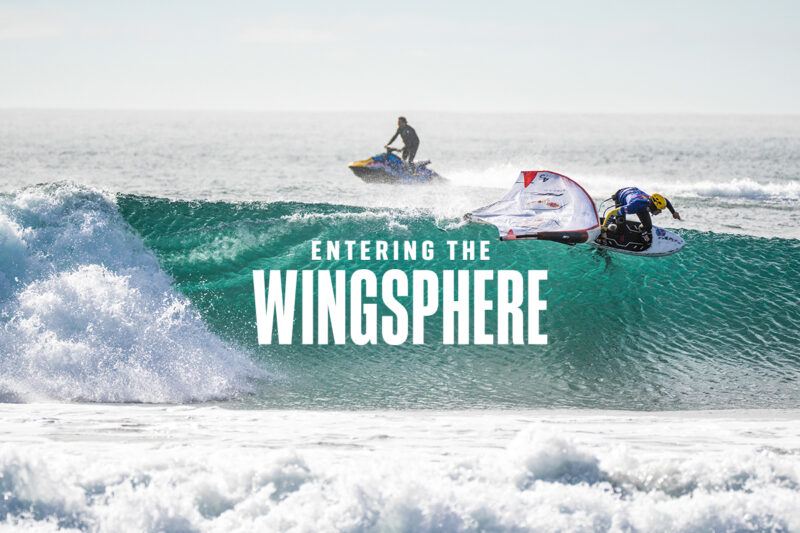
In early January 2026, AFS rider and U19 wingfoil world vice-champion Axel Gérard suffered a serious hand injury in Mexico. Yet, just three months later, he was on his way to Chile for a secret competition organized by Red Bull, unable to tell almost anyone about it before the green light was given. He came back as champion of the inaugural Red Bull Wingsphere. Now, finally, he can tell the story…
Words: Bénédicte Viseux | Photos: Gonzalo Robert / Red Bull
Axel Gérard gets the message on a train, somewhere between the AFS factory and his home in Brittany. His dad forwards him a screenshot, a long block of text that he starts reading from the bottom up, and the last line is enough: it's signed Red Bull.
The invitation is right there, clear and unexpected. Eight men, four women. The 12 best wingfoilers in the world have been selected by Red Bull for an event nobody knows anything about yet. Reached via WhatsApp on his dad's number, Axel replies that he's in, immediately, without overthinking it. The Mondial du Vent, which kicks off the GWA season, takes place two days after the competition ends, but that's not going to stop him. He'll go to Chile regardless. There's no way he's passing on this.
The catch is that he can't really talk about it. From day one, the word is discretion: no posts on social media before landing in Chile, no hints, nothing. Red Bull wants to test a brand-new format, bringing together the world's best wingfoil riders for a competition that blends wave riding and freestyle, at a spot specifically chosen for it, and the event stays under wraps until the riders touch down on location. For a 17-year-old used to documenting every session, keeping quiet for weeks is almost a feat in itself. But there's something exciting about it, this competition that doesn't officially exist yet, this secret shared with a handful of chosen few.
The problem is that January had already thrown a wrench into Axel's season before any of this. A training session in Mexico, the kind he does dozens of times a year, chasing the best conditions, and a bad crash. Extensor tendons in his index and middle fingers severed, index bone fractured. The verdict: three months out, in rehab, watching everyone else ride. When the Red Bull invitation comes in March, Axel hasn't gotten back on the wing yet. The doctors tell him it should be fine by the time the competition rolls around. “Should.” He holds onto that word and doubles down on his rehab. He needs to be there.
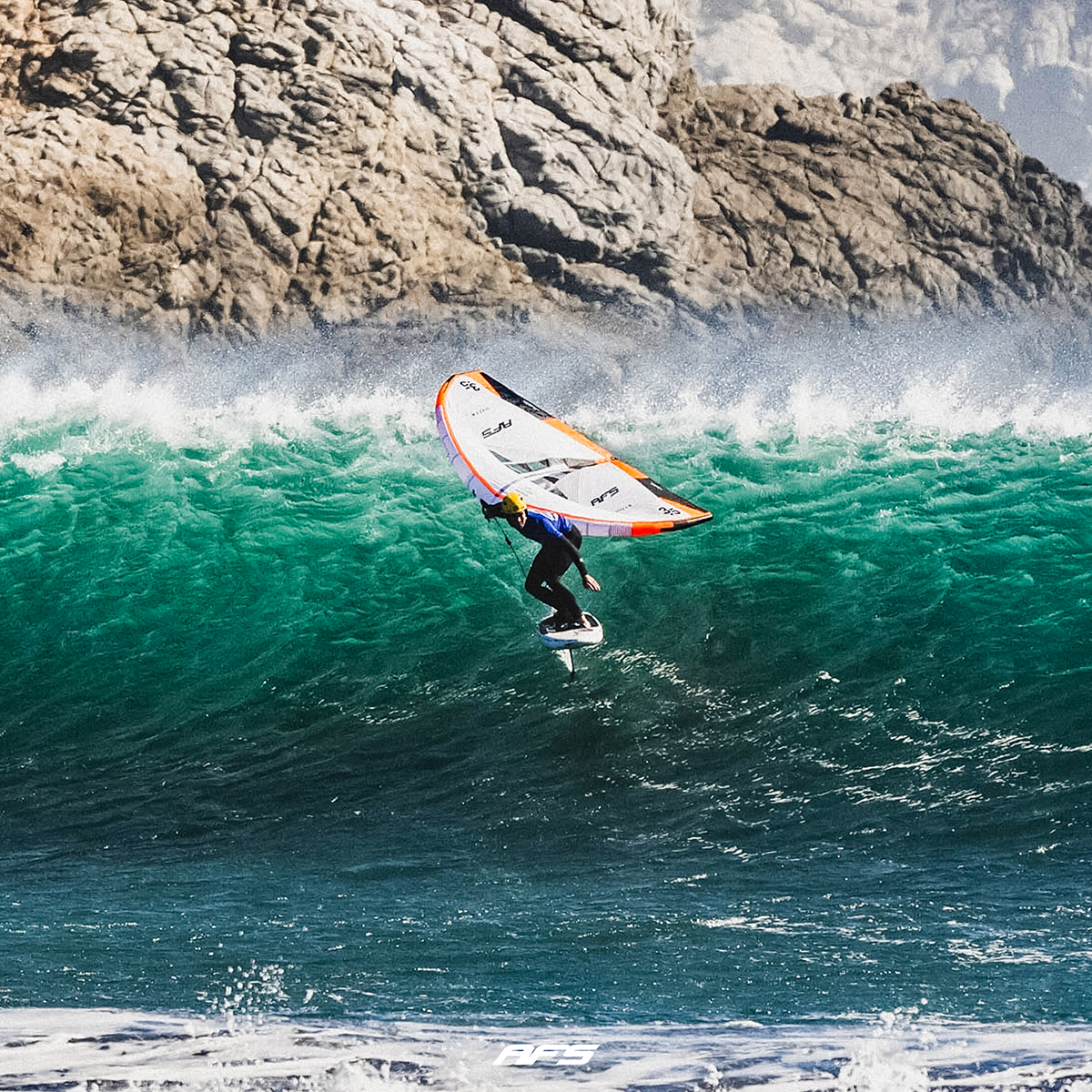
Mid-March, he heads to Iceland with a crew of Breton riders for an adventure trip. The conditions aren't what he needs for high-level training, but getting outside, moving, being in the water, it does him good. Back in Brittany, he has about ten days before flying to Santiago. And then Finistère delivers exactly what he needed: long, perfect lefts, in conditions almost identical to what's waiting for him in Chile. Smaller, but the same geometry. He trains his switch surfing, works on chaining jumps on the wave face. By the time he boards the plane on April 7th, he tells himself he's done everything he could.
💎 Premium Content Ahead! 💎
This is premium magazine content, usually only available to our subscribers, but you can access it for free when you join our mailing list!
(Already subscribed? Simply enter your email to unlock all magazine features now)
*You will receive our weekly Friday Pump newsletter, plus the latest features, gear tests and giveaway announcements.
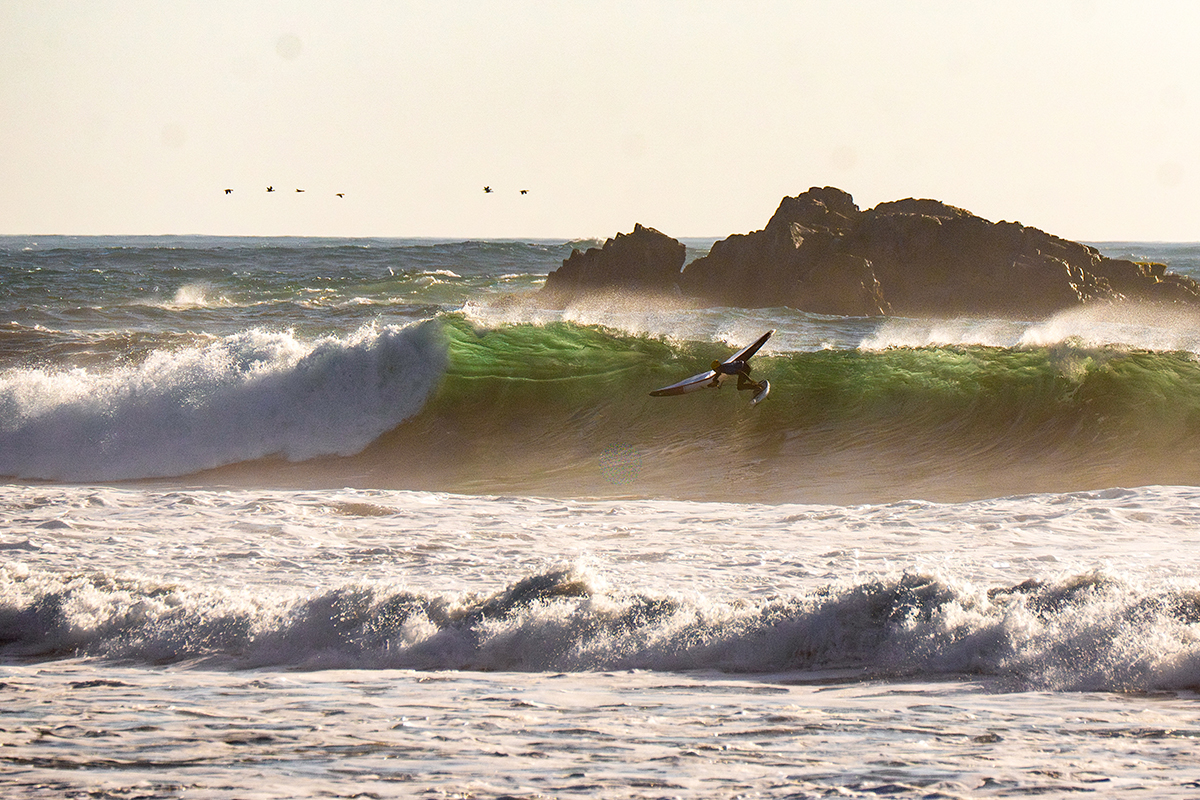
Matanzas is a low-key coastal village, a few hours south of Santiago. Not exactly a legendary spot like Punta de Lobos, but a wave worth the trip, a long left that peels off a rocky point and just keeps running. You paddle out to the peak, drop in next to the rock formations, and chase it all the way through: legs burning, foil accelerating, the wing carrying you upwind. It's Axel's first time here. Something about it reminds him of spots back in Brittany, a familiarity in the shape of the waves.
The invite list is what it is: Bastien Escofet and Malo Guénolé representing France, Chris MacDonald out of Hood River, the top Hawaiian riders, Nathan Van Vuuren, the names you see on the GWA circuit, the faces you run into stop after stop. Some are stronger in freestyle, others on the wave. The mixed format scrambles the usual scoring codes, and that's exactly the point. Red Bull didn't throw together just another wingfoil contest. They wanted to find out what happens when you blend both disciplines, when you put the best riders in the world in a context none of them fully owns. Officially a test event. In practice, the real deal.
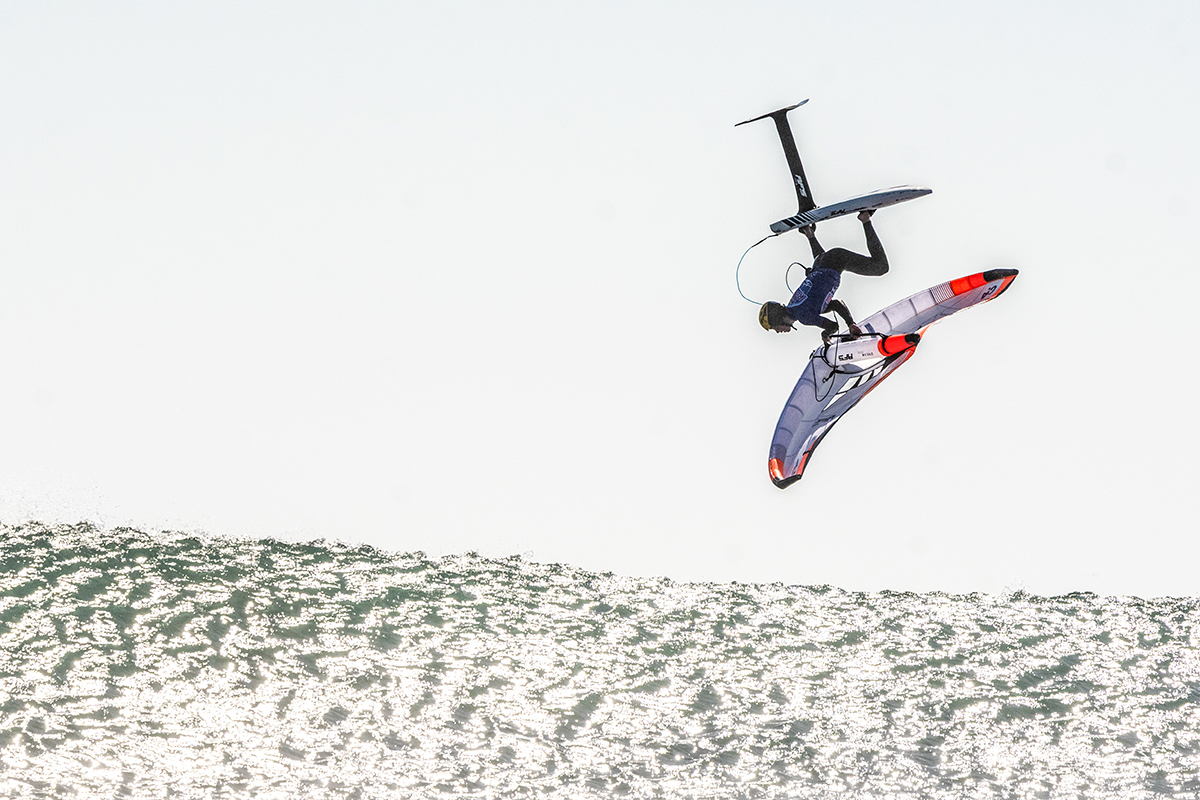
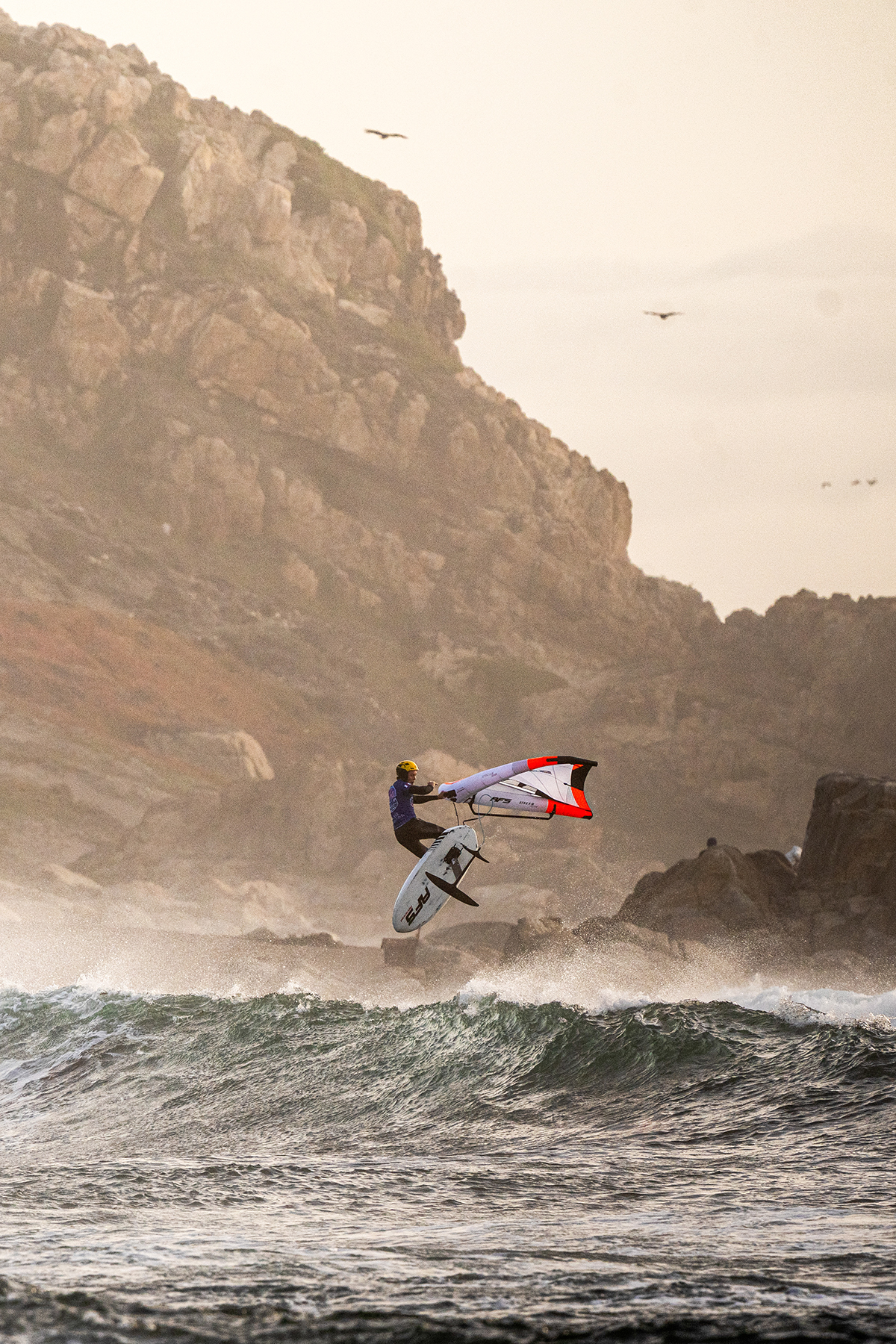
The waiting period opens on April 10th. That day, a little wind. “We scope the spot, get our bearings,” Axel explains. The next day the forecast calls for massive surf but no wind. A thick fog blankets everything for most of the day. But around 4p.m., it lifts. The wind picks up, light and uncertain. The waves are big, maybe too big. “This is a session where you're going to break gear,” they tell each other. The organizers hesitate; it's too late to run the contest. But Axel wants to go out anyway, just to see. Malo Guénolé paddles out with him. They get in the water, and Axel finds himself alone at the peak, surfing massive waves. Eventually three of them are out there with another crew member, riding through the Chilean dusk. An epic session, no judges, no scores, the perfect warm-up for the rest of the competition. Just them and the break.
Two days with no wind. Then the window opens. Everything has to happen fast.
The format is one you rarely see in wingfoil but more common in windsurfing: a single elimination first, eight riders, quarters, semis, final, then a double elimination that gives a second shot to those knocked out earlier. The winner of the first final goes straight through to the final of the second bracket. Each heat is scored out of 40 points: two waves, two jumps. Best combined score wins.
Axel's first heat starts rough. He takes a wave to warm up, ends up down the beach, must get out of the water and run back just to make it in time, the heat has already started when he paddles back out. The wind is light; his opponent Finn Spencer can't really get airborne either. Axel manages to reset, gets up, and scrapes together what he can. Score: 26 out of 40. He advances, but he's frustrated. He knows what he's capable of, and that wasn't it.
In the semifinal against Chris MacDonald, something shifts. Maybe it's the frustration from the previous heat, maybe the body has just found its rhythm. He throws everything he had planned: the tricks land, the waves come through too. Score: 32.73 out of 40, the highest score in the competition at that point. A double backflip at 9.33, a double palau at 8.27, two well-read waves. He can feel it now, he's locked in.
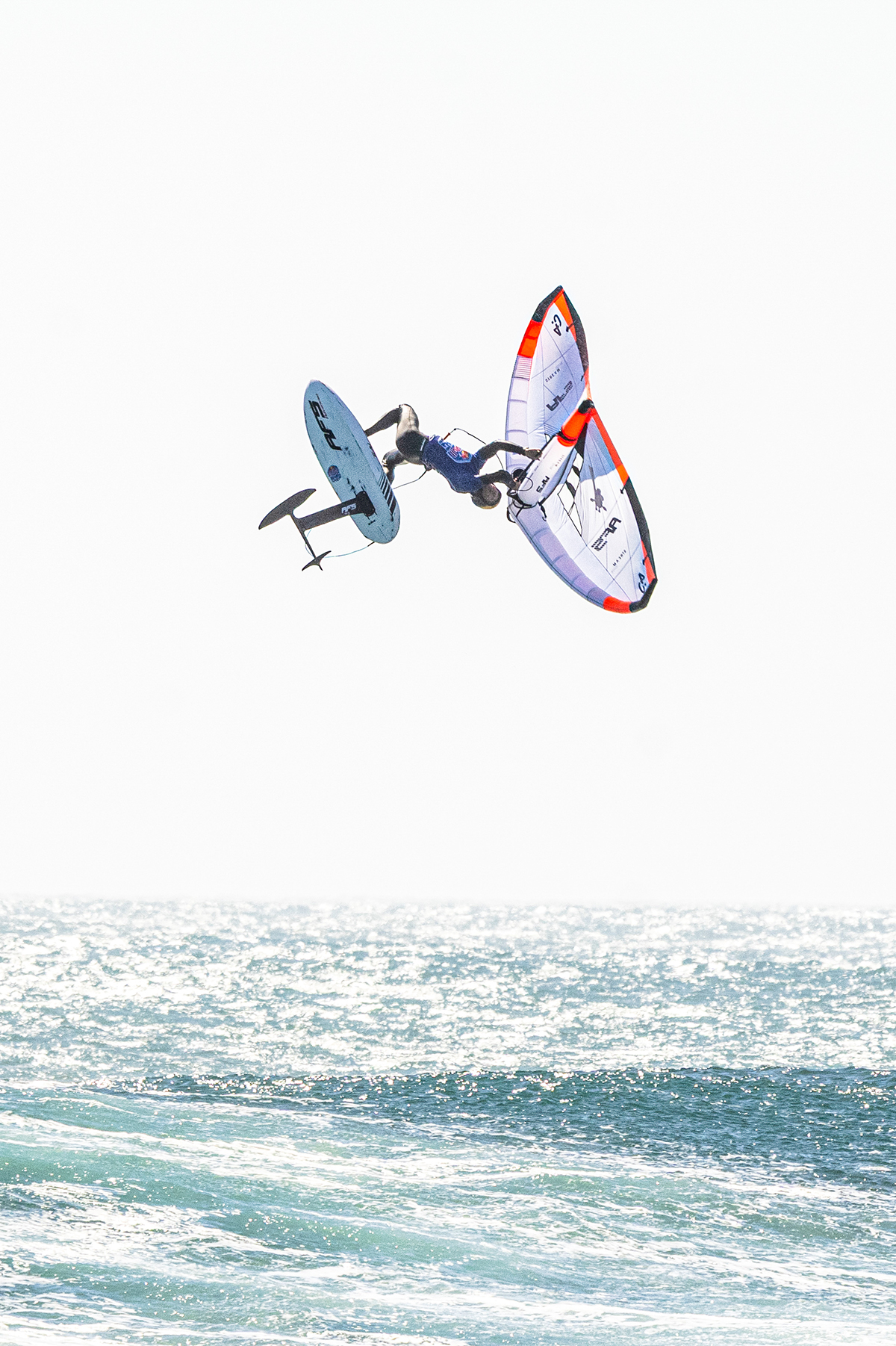
The single elimination final: him against Malo Guénolé. French versus French, at the end of the world, on a Chilean break they didn't know ten days ago. Malo is dangerous, on waves and in freestyle, hard to find a weakness. The wind picks up. Axel calls for his 3.5 after riding a 4.0 in the semis. A risky call if the wind drops, but he feels like it'll hold. It holds. He lands every trick and manages the waves with the composure of someone completely in their element. Final score: 34.43 for Axel, 33.37 for Malo. Axel takes the single elimination.
But the double elimination isn't over. And until it is, nothing is locked in.
Over the next few days, the wind will disappear. It's Wednesday, and the forecast shows nothing before Saturday, the last possible day to wrap up the competition. Sunday, no matter what, they're all on the plane. If the conditions don't come back, Axel wins the event on his single elimination victory. But that's not how he wants to take it. It wouldn't feel the same. So, he waits, along with everyone else, inside the kind of bubble this cut-off-from-the-world event creates.
Saturday morning, the wind is back. Not as strong as during the single, but there. The waves are a little smaller too, which paradoxically opens the door to more radical jumps. The competition resumes.
Malo gets through the double elimination semifinal against Bastien. The grand final is on, and with it, something the Red Bull format had been holding back: the bonus system. Each rider has one wave joker and one freestyle joker to use across the entire competition. They must declare before the heat whether they want to activate it or not. When a bonus is triggered, the rider's worst score becomes their best. Axel hasn't used either of his. Malo still has one. They play their jokers in the final, Malo calls his freestyle bonus, Axel answers with his. Fair play.
The heat drops. Axel can feel he's managing the waves better than the freestyle side of things that day. He puts up a solid score. Malo goes big in freestyle and takes the heat by 0.09 points. Nine hundredths. It all has to be done again. That moment could have been a gut punch. A final lost by a razor-thin margin, after a full day of waiting, with just a few hours left before flying home. But Axel sees it differently. He tells himself that someone who loses a final that close has two options: fall apart or go harder. He goes harder.
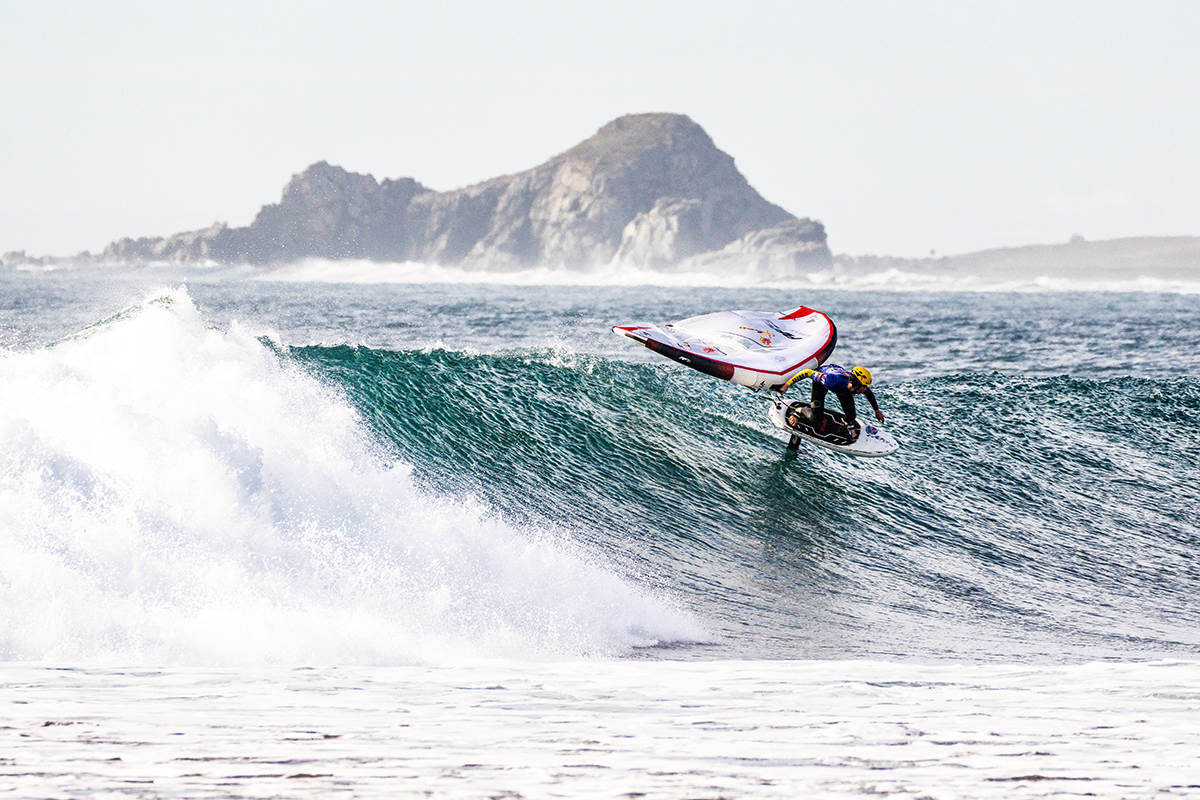
The wind drops to 10-12 knots, light, borderline for some tricks. And right there, in the middle of the heat, he stomps a double backflip on a 4.5. The first one of his life with that wing size. Score: 9.47. He comes out of that trick fully locked in, legs shaking, and knows this heat is going to be different. He follows it up with a high double palau, then two waves at 9.17 each. Final score: 36.74 out of 40, the highest score of the entire competition.
Malo answers with 28.63.
They come out of the water together, not knowing who won. In a final like this, you can't really track what the other guy is doing from out on the water. You ride, you manage, and you wait. Axel knows he rode well. He doesn't know yet if it was enough. Alan Fedit, a French rider on the AFS team alongside him, is standing on the beach, looks at him, and gives a slow nod. Subtle, but clear. Then the whole crew rushes him and lifts him up. The podium takes shape. He won. It's 7p.m. In eight hours, the plane takes off.
Axel hasn't over-analyzed what this win means. He didn't think he'd be riding at this level so quickly after the injury. Not even winning a competition. Three months earlier, he was staring at his hand in a cast, wondering if he'd make it to Chile in time. The answer is right there, in the numbers and in the trophy. It's not a revenge story, it's simply proof that when he goes all in, the body eventually follows. And that his mind never really checked out.
The GWA season is underway, and he has one goal: the world title. This season, he knows what he wants, and he knows where he's headed.