Dynamics: CABRINHA UNION SYSTEM
Few people have such a vested interest in – and on-the-water experience of – Cabrinha’s new Union system than Jon Modica, the Chairman of WaterBound Investments, and the owners of Cabrinha. Suffice to say, Jon is deeply involved – and therefore was a natural choice when we went looking for a bit more intel on their new Union foil system.
Photos James Boulding
The Union system was a response to an increasingly busy foil landscape. What were the core problems you set out to solve when you first began this project?
I’d say we were trying to solve three very real problems – and they all come back to making foiling better and simpler for people.
First was to build the best connection system possible. Everything starts with the connection. It determines how efficient your foil can be, how stiff it feels under load, what hardware you can confidently use, how big the wingspans are you can manage, and how much trust you have when you push it. A great wing on a sloppy connection is still a sloppy ride.
Secondly, foils have gotten complicated – too many SKUs. I hate the idea that riders spend a lot of money on foils and still feel like they either always have the wrong size… or they don’t even know which one to buy. And it’s impossible for retailers. Can you imagine buying $10-20K in foils and a guy walks into your shop and you don’t have the one size he wants? Well, that’s what happens when you have 30 wing/size combinations. I’d rather have customers asking for “the next size up” than being overwhelmed by choice.
Finally, find the “right” amount of bolts. Some of the tool-less connections are amazing. But bolts are also an amazing invention. The goal isn’t “zero bolts,” it’s the right number – reduce drag, keep it simple, keep it strong, and make assembly quick and confidence-inspiring.
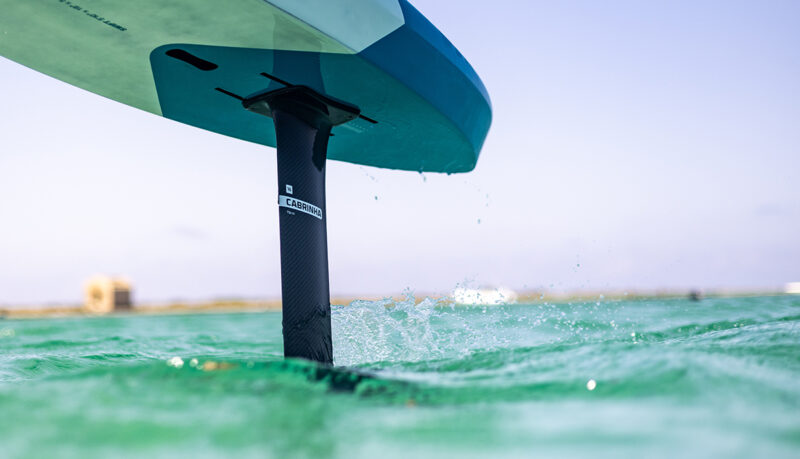
Your design objective was to “find the best connection system in the world.” Can you walk us through the moment you realized that the Mikeslab system was the right one? And what stood it apart from others?
Well… first, it’s pretty obvious that people see the light in what Mike’s Lab did. You can feel it in the market and you can see it in the direction a lot of brands have gone – the idea of a super clean, locked-in, monobloc-style connection that just feels precise.
For me, the “moment” wasn’t dramatic – it was more like: why spend countless hours trying to make a bad copy of something that’s already iconic? So I picked up the phone and called Mike. I’m beyond grateful that Mike and Stefano were willing to work with us. It lets us do this the right way – pay homage to their legacy, give credit where it’s due, and build Union around a connection system we truly believe in.
With many brands chasing modularity in their systems, how did you determine the right balance between keeping things simple, alongside performance, strength, and user confidence?
There’s no perfect answer, but I do have a pretty simple test:
If I go to the beach and I know exactly what I want to ride – and I’m not standing there debating 15 options – then we’re doing it right. We’ll always have to fight the temptation to overcomplicate things as we add wings in the future, but my goal is to keep Union the most straightforward, easiest-to-understand platform in the category… without compromising performance or trust. And hopefully everyone will keep me honest…

Yeah talking of the platform, can you give us quick overview of the three Union families?
Prestige is our high aspect series. The goal is incredible glide, big range, and efficiency – but still turning really well. Think of Prestige as the high aspect foil you can actually have fun on. I hate hearing how people buy crazy high aspect foils, finally get on a wave, and then feel like they’re just stuck there unable to do anything. Where’s the fun in that!?
Whippit is a true mid aspect foil. With our team rider Titouan Galea’s help, we found a profile that has awesome maneuverability, great top end speed, and still has pretty darn good pump and glide. It’s the “smiles per session” foil.
Rebound was made specifically for people who need a foil that excels in entry and exit from the water. Freestyle winging, kitefoiling, and big wave foiling all need that. We also found almost everyone wanted the same size – so we figured one wing in one size was well worth it to nail those three key use-cases right out of the gate.
How did your team approach designing three families that feel distinct, but still share that same underlying DNA?
I like to think the common thread is: no “bad compromises.” You can always trade something off – speed, lift, glide, turn – but too many products end up making compromises that feel accidental. With Union, each family has a clear purpose, and we’re honest about what it’s designed to do. So the “DNA” is: clean connection, confidence, efficiency, and a range that makes sense. And then each family gets to be unapologetically great at what it’s meant to be great at.
Looking specifically at the Prestige range, what kind of rider did you have in mind for this?
Anyone who benefits from a huge amount of glide but still needs it to turn.
It works for a massive range of riders and conditions. The 760 is a bit higher aspect and does require a bit more skill, but the 905 and 1150 are super user-friendly. Wingfoiling, surf foiling, downwinding – anything you need glide, speed range, and efficiency for, without losing that “I can still put this where I want it” feeling.
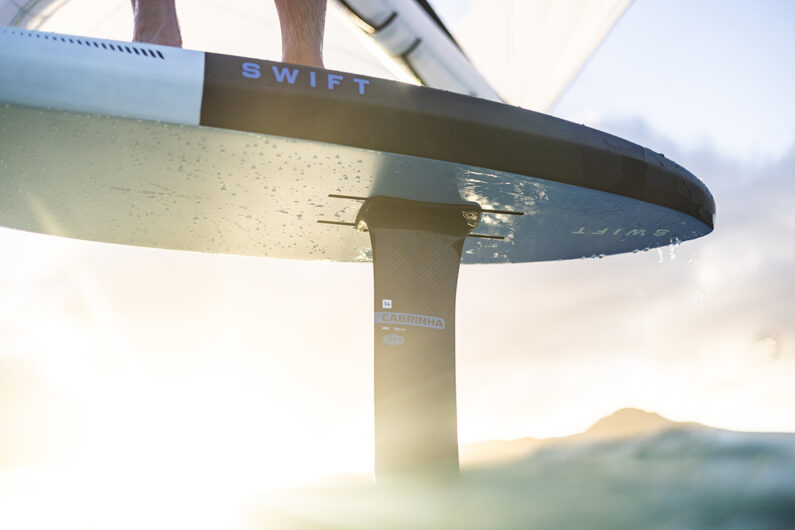
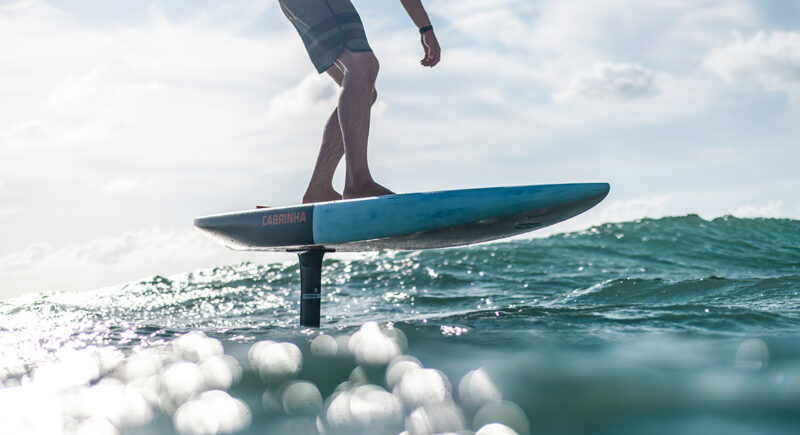
The masts are offered in both 14mm and 16mm thicknesses, with different stiffness profiles and HM carbon layups. What drove this dual-option approach?
Two masts are mostly about giving customers simple, meaningful options without turning it into a science project. Most people will be totally happy on the 16mm mast. It’s very stiff, it’s in line with what most brands are producing, and we only need a bit of high modulus carbon to get it performing at a really high level – so the cost stays reasonable.
The 14mm mast is for riders who really want peak performance. It’s just as stiff because it’s basically 100% high modulus carbon – thinner profile, premium feel, higher cost. Most riders won’t notice a huge difference unless they’re really looking for it… but for that rider, it matters. And importantly: it’s easy to understand, which fits our whole “keep it simple” objective.
Portability was highlighted as a key issue with existing foil systems. Was ease of travel a major factor from day one, and how did it influence the engineering decisions?
Yes – travel was a factor from day one. The Mikeslab connection is incredible, but a lot of race-focused systems don’t prioritize pack-down, and some don’t even have removable stabilizers – which makes travel a pain.
We knew Union needed to be performance-first and practical. The way our stabilizer breaks off makes travel easy, and it keeps the pack format friendly – especially for riders flying with gear and trying to keep life simple.
Do you see Union as a long-term platform that future Cabrinha wings and masts will be built around?
100%. Honestly, I hope it lasts forever – and I’m sure our customers do too. We wouldn’t have gone this direction if we didn’t believe it has a long future. The whole point is to give riders confidence that they’re buying into something that will keep evolving without constantly changing the foundation underneath them.
Finally, on a personal level, what part of the Union system are you most proud of? Is there a detail that you know changed everything?!
Without any doubt: the opportunity to give credit where credit is due. Mike’s Lab made an incredible connection system. And if we can help support that legacy – even 1% – by doing this the right way, that feels good. I’m going to bed easy.
And the “detail that changed everything” is honestly that locked-in feeling when you assemble it. When the connection disappears, you stop thinking about gear… and you just ride.
default