Backstory – PWR-Foil
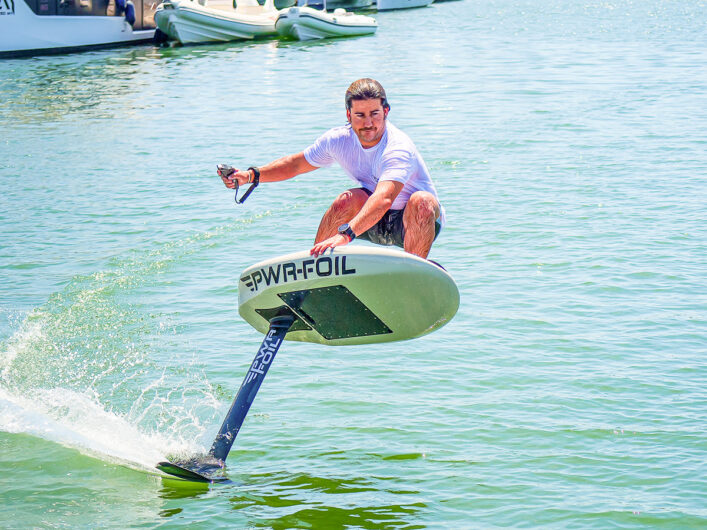
Proudly European and big on reducing their carbon footprint by making as much as they can nearby, PWR-Foil are a decade into the e-foil business and thriving. It was high time we found out there backstory, so we had a little chat with CEO and founder, Chris Defrance.
Let's start at the beginning: how did PWR-Foil come about and what was your initial vision for the brand?
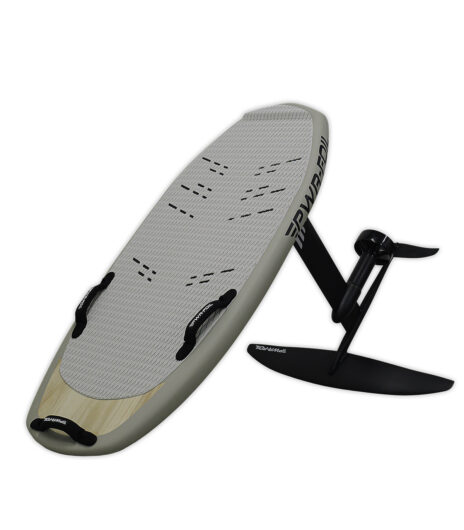
PWR-Foil was born out of the Redwood Paddle brand, of which PWR is an acronym. The idea for the electric foil came about 10 years ago at a trade show in Geneva. We were presenting a carbon foil without a motor, installed under a stand-up paddleboard. A Swiss visitor asked us, “Why don't you put a motor on it?” Right next door, Torqeedo was presenting an electric motor with a pod that looked like a foil mast. That's how the idea was born: to put a motor on a foil.
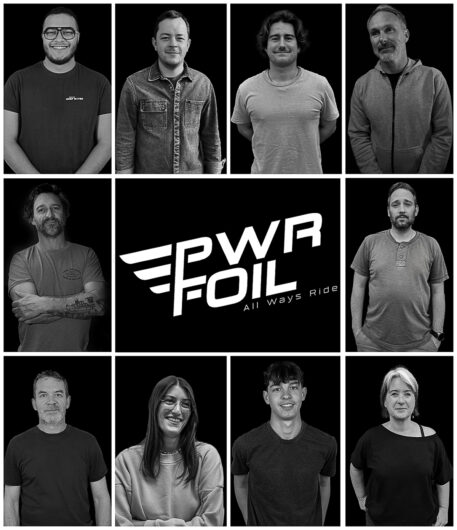
Who were the key people behind the scenes at that time and what were they doing before PWR-Foil?
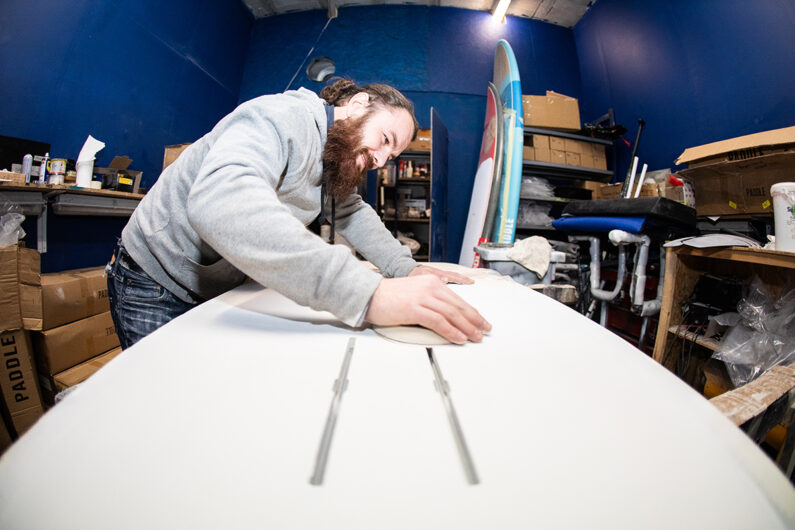
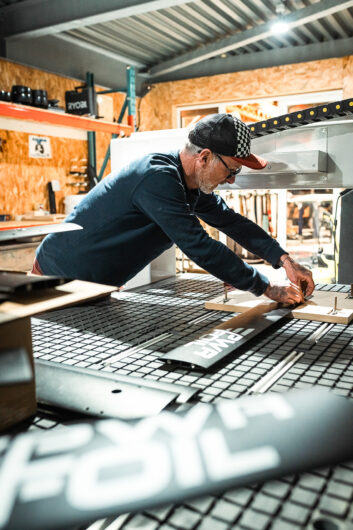
We didn't bring in any engineers at the beginning. A few friends working at Dassault and other large companies helped us. We designed the boards and foils ourselves, then had them manufactured in our factories. We were experts in composites.
The electrical and electronic aspects were more complicated. We wasted a lot of time, but made gradual progress without raising any funds. We did a lot of research on the internet and took ideas from model making. It took us at least two years before we managed to fly for more than 10 minutes with a machine.
Was that the biggest technical challenge you faced in those early years, or were there others?
There were hundreds of problems. Waterproofing remains the main challenge: we developed the machine in seawater. Waterproofing the batteries, electronics, connectors, motor shaft outputs… The foil and board were almost easy in comparison.
When we started selling, after the machines had been running under our feet for two years, we discovered new problems: users practicing in seaweed, pulling a boat with their partner and children on board… Overheating problems – which sounds crazy in the water, but the electronics were heating up enormously.
PWR-Foil has always been proudly French. Has your geographical location helped shape your identity as a brand?
Yes, we are French. France is a great surfing country. We are on the Mediterranean, with fewer waves, hence our focus on stand-up paddleboarding. We come from windsurfing and kitesurfing, then we moved on to paddleboarding. The eFoil came naturally.
Being French means mastering all the components. We manufacture close-by in Europe. Some products still come from China, but more and more are coming from Tunisia. Our industrial group has 200 employees there. We manufacture our boards and foil wings in Tunisia, and soon aluminum too. We are proud to be French and European, and are starting to export our products all over the world.
Yeah, from our previous conversations, I know that it is important to you that a large part of your production takes place in France. Is this still the case? And can you explain the advantages of this?
Yes, 75% of the makeup of the machine comes from products made in France. Some parts still come from China, but less and less. The heavy parts – boards and foils – come from Tunisia. We can do custom work here, but for a competitive price, we use our Tunisian industrial group.
What are the advantages on the European market? Proximity for delivery, stock and customer service. We used to be a French brand, we are becoming European, and I hope we will be international tomorrow. Not manufacturing in Asia allows us to keep R&D in our own hands.
Tell us a little more about your location in France: are you close to a place where you can test the products? And what is your favourite testing location?
For the past three and a half years, we have been located by the water. I can see the sea from the office. We are in Canet-en-Roussillon, 50 meters from the Mediterranean. Testing is possible all year round in just a few minutes. My favorite place though is still the waves. The eFoil really comes into its own in the long swell of the Mediterranean. Whatever the location, you need a beautiful landscape with beautiful waves.
Sustainability and longevity are hot topics in the foiling world. How does PWR-Foil approach the issue of responsible production and materials?
The key is to design sustainable products. We make high-quality, repairable products. We never throw away a machine; we always repair it, even after major damage. The best waste is no waste. Working with Tunisia means 48 hours by boat compared to four to six weeks from China. A reduced carbon footprint. We only use cleaner, bio-sourced epoxy resins.
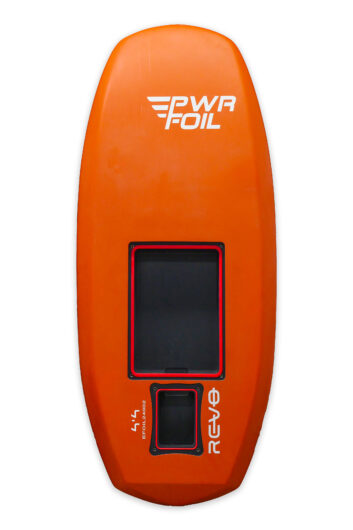
It's a daily effort, and above all, we avoid the race for materials. Our classic version has been on sale for five years. I hope to keep the Revo version for at least five years. We will always have the parts to repair older machines. It's the smartest approach.
How do you approach R&D on a daily basis? Is it focused on riders, designers, or both?
Our decision to sell directly gives us direct feedback from our customers, who are our riders. They are the first ones we listen to. Other than that we have them in-house: I ride a lot, Zéphir Acampora works for us, and all our employees ride every day. We also listen to rental companies, who give us a lot of feedback.
Then there are the designers, but we give them guidelines: an easy wing, a board that takes off better, more torque or speed… We test everything. Sometimes without stabilizers, to explore. It's a daily process: listening to customers, riders (which includes us), with in-house designers. I design the boards, so I get my answers nice and quick.
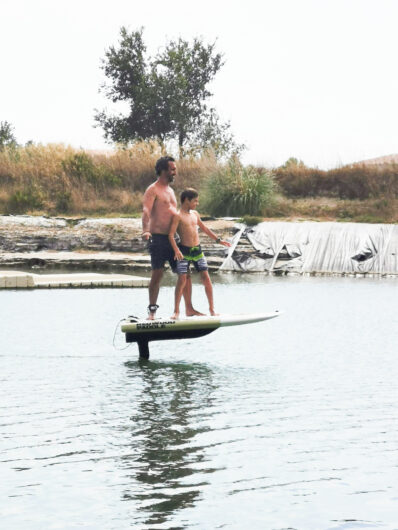
Tell us about your latest products and give us an idea of what PWR-Foil has in store for the future. And in the longer term, what will the next chapter of PWR-Foil look like?
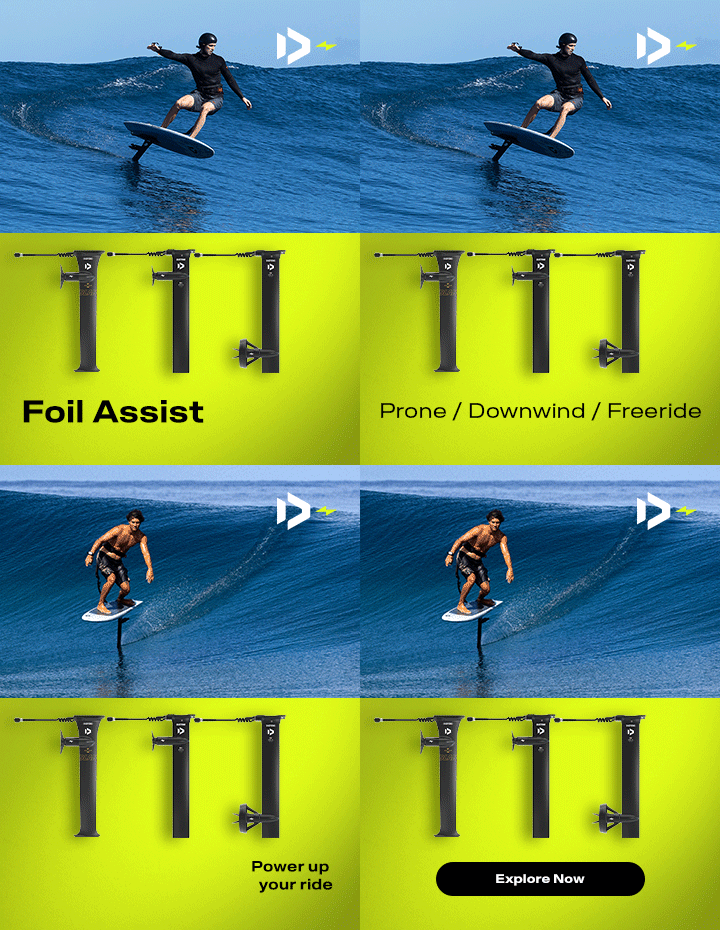
The product everyone is talking about: the foil assist. It's funny, because our first eFoil already used this concept: a box under the board, nothing in the board itself – exactly like the current foil assist systems. Our new product will be a more performant foil assist than existing ones. All our expertise has gone into this machine, which will be presented at the BOOT trade fair in Düsseldorf.
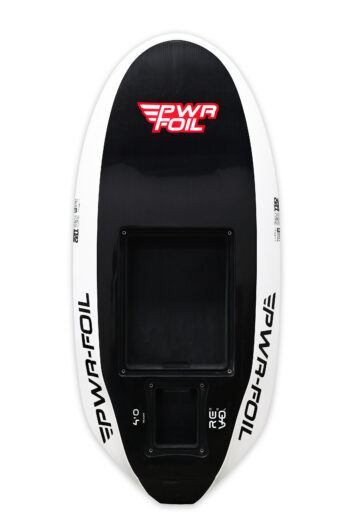
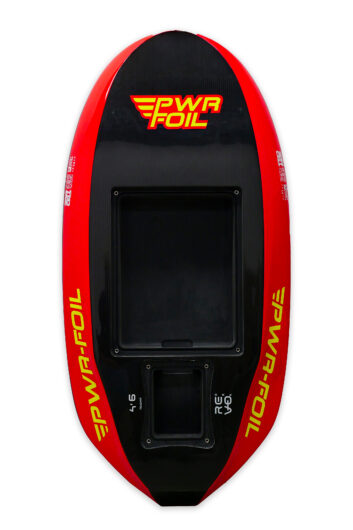
In the long term, our mission is to go even lighter. Our 4'0 or 4'6 machines weigh 22-24kg with 1.5 hours of battery life. There is no comparable machine on the market at such a reasonable price.
Then the next step – we have an app coming soon, a larger community, international development. Our expertise in water motors will lead us to other unexpected products… new developments are coming soon.